How to Substitute Yarn Correctly Every Time
Correct yarn weight substitution is defined as replacing a pattern’s specified yarn with a different yarn while maintaining the same weight category, gauge, fiber behavior, and total yardage. Get it wrong and your sweater comes out two sizes too large, your amigurumi loses its firm shape, or your blanket drapes like cardboard. The Craft Yarn Council (CYC) standardized eight yarn weight categories precisely to make these comparisons possible. Understanding how to use that system, combined with gauge math and fiber knowledge, is what separates a successful substitution from a frustrating unravel.
How to substitute yarn weight correctly: identifying the right category
The CYC weight system runs from Category 0 (lace) through Category 7 (jumbo). Most projects cluster in three categories: Fingering (1), DK (3), and Worsted (4). Mastering those three covers the vast majority of substitution decisions a knitter or crocheter will ever face.
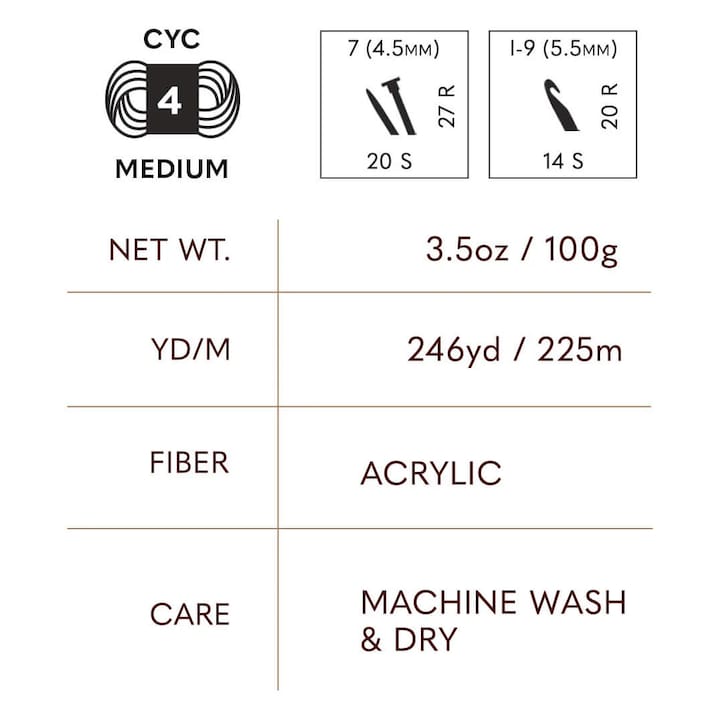
Start by reading the ball band on your original yarn. The band lists the weight category symbol, the recommended needle or hook size, and the gauge over 4 inches. Those three data points together define what you need to match. A yarn labeled “worsted” by one manufacturer may knit at a slightly different gauge than another, so the gauge range on the label matters more than the word “worsted” alone.
When the label is missing or unclear, use WPI (wraps per inch) to verify the weight category. WPI measures thickness by wrapping yarn around a ruler for one inch and counting the wraps. Fingering weight typically measures 14 or more WPI, while Worsted weight falls in the 9–12 WPI range. This gives you an objective check that does not rely on manufacturer labeling.
Borderline yarns sit between categories and require extra attention. A yarn that measures 13 WPI could behave like fingering or sport weight depending on fiber content and twist. In those cases, the gauge swatch is the deciding factor, not the label or the WPI count alone.
Check the ball band for the CYC weight symbol and gauge range.
Measure WPI when labels are absent or ambiguous.
Compare recommended needle or hook sizes between original and substitute.
Note the fiber content, since fiber affects drape and stretch even within the same weight category.
Flag borderline yarns for swatching before committing to a full purchase.
Pro Tip: Knit or crochet a 6-inch swatch instead of the standard 4-inch square. Blocking changes dimensions, and a larger swatch gives you a more accurate post-wash gauge reading.
Calculating gauge, needle size, and yardage adjustments
Substituting a different weight category requires adjustments to needle size, stitch counts, and yardage. Moving up one weight category creates a larger, denser fabric. Moving down creates a smaller, lighter one. Neither outcome is acceptable if the pattern depends on specific finished measurements.

The gauge adjustment formula is straightforward. Multiply the original stitch count by the ratio of your new gauge to the pattern gauge, then round to the nearest pattern multiple.
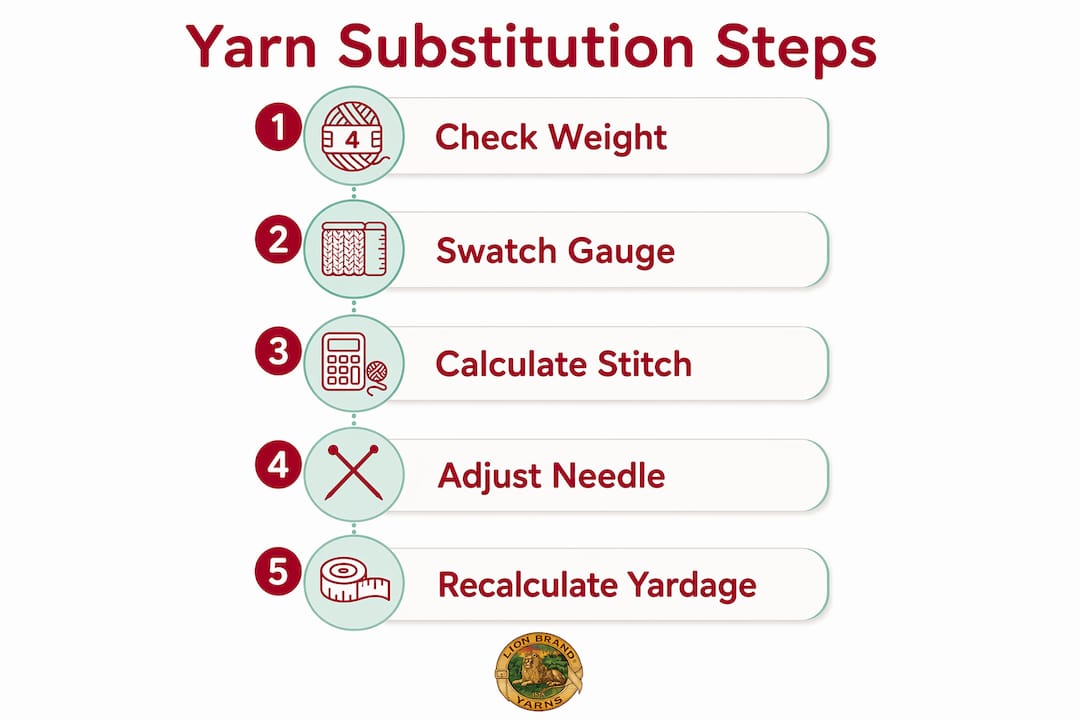
New stitch count = original stitch count × (new gauge ÷ pattern gauge)
For example: a pattern calls for 20 stitches over 4 inches at worsted gauge. Your DK substitute knits at 22 stitches over 4 inches. The calculation is 20 × (22 ÷ 20) = 22 stitches. You need to cast on 2 extra stitches to hit the same finished width. Apply the same logic to row counts for length.
Yardage requires equal attention. Successful yarn substitution means calculating total yards needed from the pattern, not just matching skein count. A pattern calling for 3 skeins of 200-yard worsted needs 600 yards total. If your substitute DK yarn comes in 250-yard skeins, you need at least 3 skeins to cover 600 yards, plus one extra skein for swatching and dye lot safety.
Record the total yardage the pattern requires (yards, not skein count).
Divide that number by the yardage per skein of your substitute yarn.
Round up to the next whole skein.
Add one extra skein for swatching, tension differences, and dye lot matching.
Adjust needle or hook size to match the substitute yarn’s recommended gauge range.
| Adjustment | What to calculate | Why it matters |
|---|---|---|
| Stitch count | Original stitches × (new gauge ÷ pattern gauge) | Maintains finished width |
| Row count | Original rows × (new row gauge ÷ pattern row gauge) | Maintains finished length |
| Total yardage | Pattern total yards ÷ substitute yards per skein | Prevents running short mid-project |
| Needle or hook size | Match substitute yarn’s label recommendation | Achieves correct fabric density |
Pro Tip: Always buy your extra skein from the same dye lot as the rest of your purchase. Dye lots can vary visibly, and a mismatched skein used for the final rows of a garment is impossible to hide.
Common pitfalls when substituting yarn weight
The biggest mistake crafters make is assuming all yarns labeled the same weight perform identically. Ply count is not a reliable guide for substitution. A two-ply yarn can be bulkier than a four-ply yarn depending on how tightly each strand is spun. Weight category and gauge are the only reliable benchmarks.
Fiber behavior creates the second major source of problems. Cotton has almost no stretch, so a cotton substitute for a wool pattern will produce a stiffer, less forgiving fabric. Acrylic stretches more than wool under tension, which can throw off gauge even when WPI matches. Changing yarn weight affects drape, warmth, and size in ways that fiber content amplifies or reduces.
Wool and alpaca block out significantly, so swatch before and after washing.
Cotton and bamboo yarns add weight to garments, which can cause them to grow in length over time.
Acrylic yarns do not block the same way natural fibers do, so wet blocking will not reshape them.
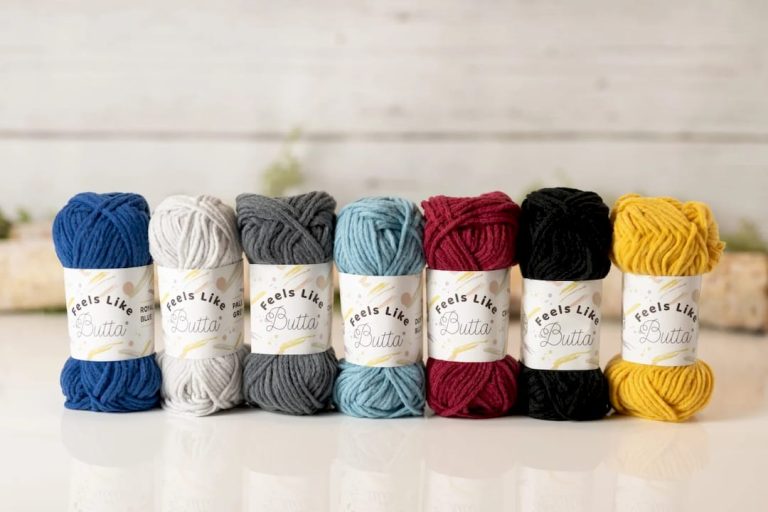
Chenille and velvet yarns, like Lion Brand Feels Like Butta, have a different drape than standard spun yarns even at the same weight category.
Needle and hook size mismatches compound these issues. Using a needle that is too large for your substitute yarn produces an open, floppy fabric. Too small, and the fabric becomes stiff and dense. Both outcomes change the finished dimensions and the feel of the project.
“Swatching with substituted yarns is the best way to verify gauge, fabric texture, and suitability before starting the full project. Swatches provide practical information beyond WPI and labels, helping you adjust tension and needle size before you commit hours of work to the wrong combination.
Garments carry the highest risk from incorrect substitution. A Fitted Top depends on precise gauge to achieve the correct size. Even a half-stitch difference per inch across a 40-inch circumference adds up to a 2-inch error in the finished measurement.
Substitution strategies by project type
Different project types tolerate weight changes differently. Blankets and afghans are the most forgiving. A worsted weight blanket pattern worked in bulky yarn will simply produce a larger, thicker blanket. That may be a deliberate design choice rather than a mistake. For a project like a triangle knit shawl, moving from DK to bulky weight creates a denser, warmer accessory with a different drape character.
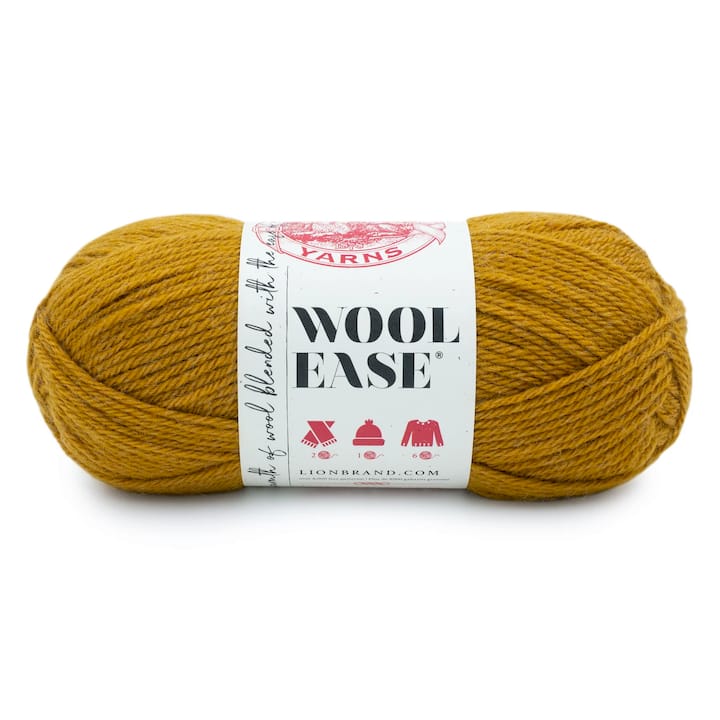
Garments require the most careful calculation. Fit depends on gauge accuracy, and fiber behavior affects how the finished piece hangs and moves. Lion Brand Wool-Ease in worsted weight is a reliable substitute for many worsted patterns because its gauge is consistent and its wool-acrylic blend blocks predictably.
| Project type | Substitution tolerance | Key consideration |
|---|---|---|
| Blankets and afghans | High | Size change is acceptable; adjust yardage |
| Scarves and shawls | Medium | Drape changes with fiber and weight |
| Hats and accessories | Medium | Gauge affects fit around the head |
| Garments | Low | Every half-stitch matters for sizing |
| Amigurumi | Low | Tight gauge is required for firm stuffed shapes |
Amigurumi projects need a tight, dense fabric to hold stuffing without gaps. Moving up even one weight category, say from sport to worsted, produces a noticeably larger toy. Lion Brand 24/7 Cotton in worsted weight is a popular choice for amigurumi because cotton produces a firm stitch definition with minimal stretch.
For lace projects, doubling lace weight yarn held together approximates fingering weight. The fabric will not match exactly, but it is a workable solution when fingering weight is unavailable. Lion Brand Coboo in its DK weight works well for shawl patterns that call for fingering weight when a slightly heavier drape is acceptable.
Bulky and super bulky substitutions are straightforward in terms of gauge math but require significant yardage recalculation. Bulky yarn covers ground fast, so total yardage drops considerably compared to a worsted original. Lion Brand Wool-Ease Thick & Quick is a super bulky yarn that substitutes reliably for patterns in that category, with consistent gauge across colorways.
Pro Tip: When substituting a heavier yarn into a lace or openwork pattern, the open stitch structure will close up and the design detail will be lost. Reserve weight-up substitutions for solid stitch patterns where texture, not openwork, carries the design.
Key takeaways
Correct yarn substitution requires matching weight category, gauge, fiber behavior, and total yardage, then adjusting stitch counts and tool sizes before casting on a single stitch.
| Point | Details |
|---|---|
| Match weight category first | Use the CYC system and WPI measurement to confirm the substitute falls in the same category. |
| Calculate yardage by yards, not skeins | Total pattern yards divided by substitute skein yardage gives the accurate skein count needed. |
| Adjust stitch and row counts | Use the gauge ratio formula to recalculate counts and maintain finished dimensions. |
| Account for fiber behavior | Cotton, wool, and acrylic each block and stretch differently, affecting final size and drape. |
| Always swatch before starting | A blocked swatch confirms gauge and fabric quality before hours of work are committed. |
What Lion Brand has learned about yarn substitution
Yarn substitution is one of the most misunderstood skills in knitting and crochet, and the confusion almost always comes from the same place. Crafters focus on the label name and miss the gauge. The word “worsted” on a ball band is a starting point, not a guarantee. Two worsted yarns from different fiber families can knit at gauges that differ by a full stitch per inch, and that difference compounds across every row of a sweater.
The crafters who substitute with confidence share one habit: they swatch obsessively and they do the math before they buy. They calculate total yardage from the pattern, not from skein count. They wash and block their swatch before measuring it. They treat the swatch as the first investment in the project, not as an optional step.
Lion Brand designs yarns across every CYC weight category precisely because substitution is a real and frequent need. When a pattern calls for a DK weight and the original yarn is discontinued, Wool-Ease DK steps in with a consistent gauge and a fiber blend that blocks predictably. When a crafter wants to try a bulky blanket pattern in a softer hand, Feels Like A Dream delivers the weight category with a completely different texture experience.
The deeper lesson is that substitution is not a compromise. Done correctly, it is a creative decision. Knowing the rules of gauge, fiber, and yardage gives crafters the freedom to choose the yarn that fits their vision, not just the one the pattern happened to specify.
— Lion Brand Yarn team
Ready to put your substitution skills to work?
Lion Brand carries yarns in every CYC weight category, from fingering through jumbo, so finding a well-matched substitute for any pattern is straightforward. The Wool-Ease family alone spans multiple weights, giving crafters a consistent fiber blend across categories for reliable gauge comparisons.
For crafters who want a structured way to practice substitution, Lion Brand’s knit and crochet kits include yarn and a pattern designed to work together, making them a low-risk way to build gauge confidence before tackling a full substitution on your own. Each kit takes the guesswork out of pairing, so you can focus on learning the math and the swatching process that makes every future substitution easier.
FAQ
What does it mean to substitute yarn weight correctly?
Correct yarn weight substitution means replacing a pattern’s yarn with one in the same CYC weight category, then adjusting gauge, stitch counts, needle or hook size, and total yardage to maintain the intended finished dimensions and fabric character.
Is ply count the same as yarn weight?
Ply count is not the same as yarn weight when referring to the CYC weight system. A two-ply yarn can be bulkier than a four-ply yarn depending on how each strand is spun, so ply count alone is not a reliable guide for substitution.
How do I calculate how much yarn I need when substituting?
Find the total yardage the pattern requires, then divide that number by the yardage per skein of your substitute yarn. Round up to the next whole skein and add one extra skein for swatching and dye lot safety.
Can I substitute a different fiber even if the weight matches?
Yes, but fiber behavior changes the finished fabric. Fiber differences affect drape, stretch, and how the piece responds to blocking, so always swatch the substitute fiber before starting the full project.
What is the best way to verify my substitute yarn will work?
Swatching is the most reliable method to confirm gauge, fabric texture, and suitability. Knit or crochet a swatch, wash and block it the same way you plan to treat the finished project, then measure the gauge before casting on.