What Is DK Weight Yarn? Your Guide to This Versatile Weight
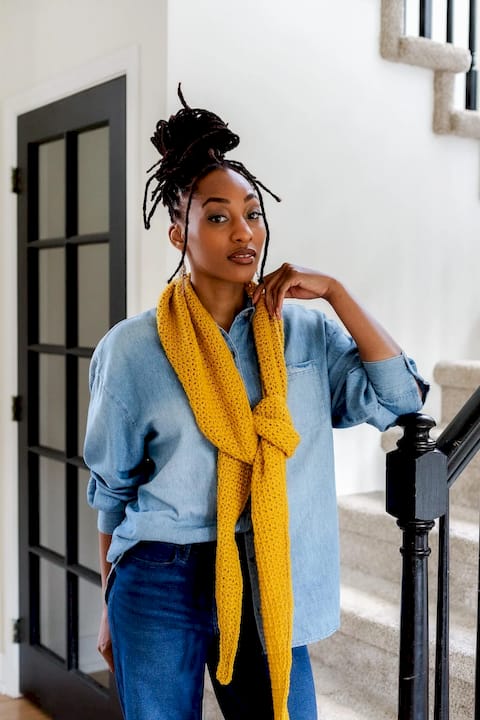
Image: Scarf Using Wool-Ease DK Yarn
DK weight yarn, also called double knitting yarn, is classified as category 3 Light by the Craft Yarn Council, with a standard gauge of 21 to 24 stitches per 4 inches on US size 5 to 7 needles (3.75 to 4.5 mm). It sits between sport weight and worsted weight on the yarn thickness scale, which makes it one of the most practical weights in any crafter’s stash. The name “double knitting” is a historical reference. It originally described knitting two layers simultaneously, but today it simply identifies this medium-light weight category. Lion Brand offers two standout options in this weight: Wool-Ease DK Yarn and 24/7 Cotton DK Yarn, both engineered for the balance of drape and stitch definition that makes DK so popular for garments and accessories.
What is DK weight yarn compared to other yarn weights?
DK weight yarn is thinner than worsted but thicker than sport or 4 ply, and that precise middle position is what gives it such broad appeal. In practical terms, DK typically runs about 50 grams per 100 meters, while 4 ply runs closer to 28 grams per 100 meters. That difference in yardage per gram translates directly into how your finished fabric feels and behaves.
The wraps per inch (WPI) measurement is the clearest way to distinguish yarn weights by hand. DK lands at roughly 11 to 14 WPI, while sport weight sits closer to 15 to 18 WPI and worsted falls between 9 and 12 WPI. These ranges overlap slightly, which is exactly why swatching matters more than trusting a label alone.
| Weight | WPI | Gauge (sts per 4 in) | Needle Size (US) |
|---|---|---|---|
| Sport / 4 ply | 15–18 | 24–28 | 3–5 |
| DK (category 3) | 11–14 | 21–24 | 5–7 |
| Worsted (category 4) | 9–12 | 16–20 | 7–9 |
Visually and tactilely, DK produces a fabric that drapes more softly than worsted and knits up faster than sport. Worsted creates a denser, warmer fabric that holds its shape well in structured pieces like bags and home decor. DK creates a more fluid fabric that moves with the body, which is why it dominates garment knitting.
Pro Tip: If you are substituting DK for sport weight or vice versa, needle size adjustment alone rarely fixes the gauge mismatch. Always swatch before committing to a full project.
How to achieve correct gauge with DK yarn
Gauge is the number of stitches and rows that fit within a specific measurement, and matching it to your pattern is the single most important step before starting any sized project. A pattern written for DK at 22 stitches per 4 inches will produce a completely different garment if your actual swatch measures 20 stitches per 4 inches. That two-stitch difference across a sweater body can mean several inches of extra width.
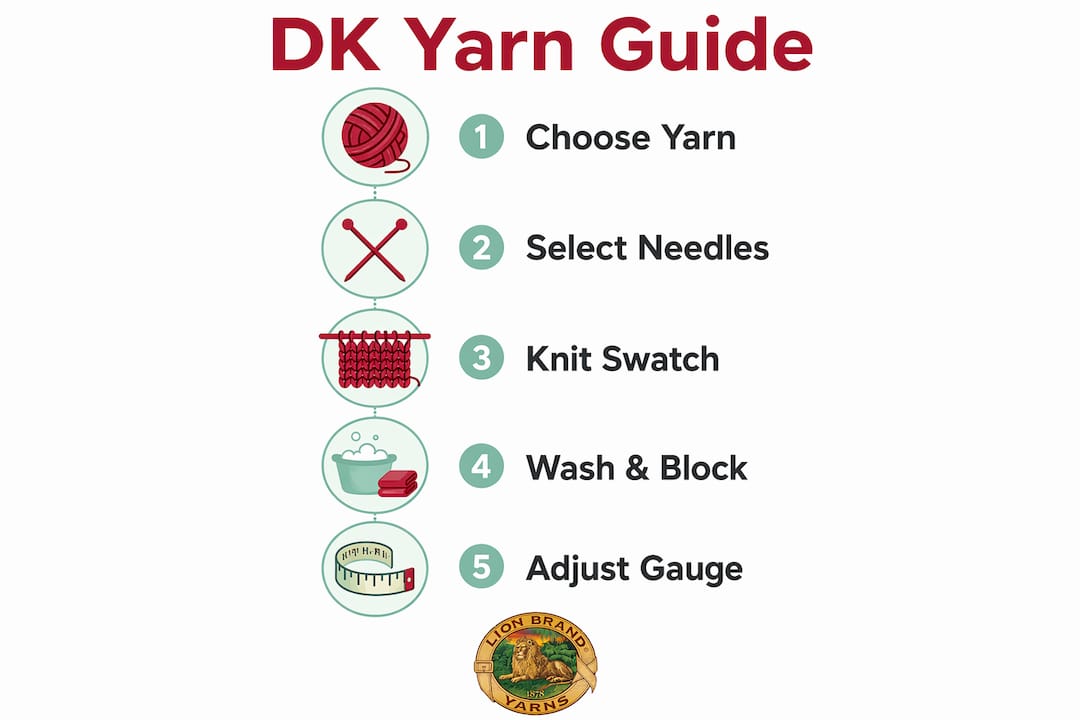
Here is a reliable process for swatching DK weight yarn before any project:
Cast on at least 20 stitches using the needle size listed in your pattern.
Work 4 to 5 inches in the stitch pattern specified (stockinette, seed stitch, etc.).
Bind off loosely and let the swatch rest for 30 minutes before measuring.
Measure in the center of the swatch, not at the edges where tension shifts.
Count stitches across 4 inches and compare to the pattern gauge.
Adjust needle size and reswatch if needed. Go up a needle size for fewer stitches per inch; go down for more.
Switching yarn weights without adjusting gauge leads to fabric that is either too loose and floppy or too tight and stiff. This is especially true when moving between DK and worsted, where the WPI difference is significant enough to affect drape, hand feel, and finished dimensions. Lion Brand’s Boye Aluminum Straight Knitting Needles in sizes 6 to 10.5 cover the full DK range and give you the flexibility to swatch at multiple sizes without buying separate tools.
Pro Tip: Wash and block your swatch the same way you plan to care for the finished item. Some fibers, especially wool and cotton blends, change size after washing, and you need that information before you knit 200 rows of a sweater.
What are the best projects for DK weight yarn?
DK yarn is highly versatile, suited for garments, accessories, and baby items because it delivers warmth without bulk and drape without limpness. That balance is hard to find in heavier or lighter weights. Here is where DK consistently performs best:
Sweaters and cardigans. DK creates a lighter, more breathable fabric than worsted, making it the go-to choice for layering pieces and three-season garments. A DK cardigan worn over a shirt feels comfortable without overheating.
Baby garments and blankets. The finer gauge produces soft, lightweight items that are gentle against sensitive skin. Lion Brand’s Knit Bright Stripes Baby Blanket Pattern is designed specifically for this weight.
Shawls and wraps. DK gives shawls enough body to hold their shape while still draping elegantly over the shoulders. The Triangle Knit Shawl Pattern from Lion Brand shows exactly how well DK handles this format.
Hats, mittens, and accessories. The weight knits up fast enough to finish a hat in an evening but produces a fabric dense enough to block wind.
Cables, lace, and colorwork. DK has excellent stitch definition for cables and colorwork, showing the structure of complex patterns more clearly than bulkier weights where stitch detail gets lost.
For crochet, DK works beautifully with a US size E (3.5 mm) to G (4.0 mm) hook. It produces amigurumi with tight, clean stitches and garments with a polished, professional drape. The Knit Light and Lacy Pullover Pattern from Lion Brand demonstrates how DK handles open, airy stitch work without losing structure.
How to choose the best DK yarn for your project
Choosing the right DK yarn comes down to three factors: fiber content, washability, and the season or end use of your project. Getting all three right before you buy saves time and frustration.
Wool and wool blends offer warmth, elasticity, and excellent stitch definition. Lion Brand’s Wool-Ease DK Yarn blends acrylic with wool for machine-washable durability, which makes it practical for everyday garments and gifts.
Cotton and cotton blends produce breathable, structured fabric ideal for warm-weather tops, dishcloths, and market bags. Lion Brand’s 24/7 Cotton DK Yarn is 100% mercerized cotton, meaning it holds color well and softens with washing.
Acrylic is the budget-friendly choice for large projects and items that need frequent washing. It does not felt, resists pilling well in anti-pilling formulas, and comes in the widest color range.
Alpaca and alpaca blends add a halo and exceptional softness, making them ideal for next-to-skin accessories. They have less elasticity than wool, so gauge swatching is especially important.
Recycled and sustainable blends are a growing category. Lion Brand’s Wool-Ease Recycled Yarn brings the familiar Wool-Ease feel in a more environmentally considered fiber.
When buying online, check the yardage per skein rather than just the weight in grams. Two DK skeins labeled 100 grams can have very different yardage depending on fiber density, and yardage is what determines how many skeins your pattern actually requires. DK yarn is widely available across price points and fiber types, so you rarely need to compromise on one factor to get another.
Key takeaways
DK weight yarn is the most versatile medium-light yarn available, delivering the stitch definition of finer weights with the speed and warmth of heavier ones.
| Point | Details |
|---|---|
| Standard classification | DK is category 3 Light with a gauge of 21 to 24 stitches per 4 inches on US 5 to 7 needles. |
| Position on the weight scale | DK is thinner than worsted and thicker than sport, with 11 to 14 wraps per inch. |
| Gauge swatching is non-negotiable | Always swatch and wash your swatch before starting any sized project, especially when substituting yarns. |
| Best project types | Sweaters, baby garments, shawls, hats, cables, lace, and colorwork all perform well in DK. |
| Fiber choice drives end use | Match fiber to season and care needs: wool blends for warmth, cotton for breathability, acrylic for washability. |
Explore DK yarn and patterns from Lion Brand
Lion Brand carries a full range of DK weight yarns built for every project type and skill level, from the machine-washable Wool-Ease DK Yarn to the breathable 24/7 Cotton DK Yarn. Whether you are casting on a fitted sweater, a delicate shawl, or a baby blanket, there is a DK option in the Lion Brand catalog engineered for the job. Pair your yarn with a free pattern from the Lion Brand library, or pick up a ready-to-start kit that includes everything you need.
The Vanna’s Choice Yarn collection offers a beloved workhorse option with a soft hand and hundreds of color choices, perfect for gifting or personal projects. Browse the full yarn catalog and free pattern library at Lion Brand to find your next DK project today.
FAQ
What does DK weight yarn mean?
DK stands for double knitting, a term that now identifies category 3 Light yarn in the Craft Yarn Council system. It knits to a gauge of 21 to 24 stitches per 4 inches on US size 5 to 7 needles.
How is DK yarn different from worsted weight?
DK is thinner than worsted, producing a lighter and more breathable fabric with better drape. Worsted weight creates a denser, warmer fabric and knits at 16 to 20 stitches per 4 inches, compared to DK’s 21 to 24 stitches.
Can I substitute DK yarn for worsted in a pattern?
Substituting DK for worsted requires careful gauge adjustment because the two weights produce different fabric densities. Always swatch with the substitute yarn and adjust needle size before starting the project.
What needle size do I use for DK yarn?
DK weight yarn uses US size 5 to 7 needles, which corresponds to 3.75 to 4.5 mm. The exact size depends on your personal tension and the pattern gauge requirements.
What projects is DK yarn best for?
DK yarn performs best in sweaters, cardigans, baby garments, shawls, hats, and any project requiring clear stitch definition such as cables, lace, or colorwork. Its balance of warmth and drape makes it the most versatile weight for garment knitting.
