
8 Yarn Weight Categories: Printable Chart, WPI Test, and Swatch Steps
There are eight standard yarn weight categories, numbered 0 through 7, running from Lace up to Jumbo. This guide breaks down every category with its gauge, needle and hook ranges, and wraps-per-inch bands, plus a step-by-step method for identifying a mystery skein with no label. It also points to Lion Brand yarns and patterns suited to each weight, so matching a project to the right skein takes minutes, not guesswork.
Most yarns can be accurately classified using wraps per inch, with 30 or more wraps indicating lace weight and 1 to 4 wraps signifying jumbo yarns.
Swatching and measuring gauge are essential to confirm a yarn’s weight, as fiber density and ply structure can affect classification within categories.
Patterns for beginners generally recommend worsted weight yarn, which balances ease of working speed and stitch definition.
The eight-category system ensures consistency across the industry, but fiber content and ply can cause variations that require swatching and adjustment.
Yarn from Lion Brand covers all categories, with specific options optimized for different projects, from delicate lace to oversized arm-knits.
Table of Contents
Yarn Weight Categories Complete List: The Standard Chart
The Craft Yarn Council built the numbering system that the entire yarn industry now leans on. Every major yarn label, pattern designer, and needle manufacturer in the United States sizes their products against these eight categories, which is why this yarn weight chart is worth bookmarking.
Here’s the full breakdown, with gauge measured in stockinette stitches over 4 inches:
| Category | Common Names | Knit Gauge (4 in) | Needle Size (mm) | Hook Size (US) | WPI Range |
|---|---|---|---|---|---|
| 0 | Lace | a high number of stitches per 4 inches | about one and a half to two millimeters needle size | Steel 6 | thirty or more wraps per inch |
| 1 | Super Fine, Fingering, Sock | around thirty stitches per 4 inches | a little over two to three millimeters needle size | B/1–E/4 | between fourteen and thirty wraps per inch |
| 2 | Fine, Sport, Baby | mid-twenties stitches per 4 inches | three to almost four millimeters needle size | E/4–7 | twelve to eighteen wraps per inch |
| 3 | Light, DK | low twenties stitches per 4 inches | just under four to four and a half millimeters needle size | 7–I/9 | eleven to fifteen wraps per inch |
| 4 | Medium, Worsted, Aran | between mid-teens and twenty stitches per 4 inches | about four and a half to five and a half millimeters needle size | I/9–K/10 | roughly nine to twelve wraps per inch |
| 5 | Bulky, Chunky | low to mid-teens stitches per 4 inches | five and a half to eight millimeters needle size | K/10–M/13 | six to nine wraps per inch |
| 6 | Super Bulky, Roving | between single digits and eleven stitches per 4 inches | from eight to nearly thirteen millimeters needle size | M/13 | five to six wraps per inch |
| 7 | Jumbo | six or fewer stitches per 4 inches | about thirteen millimeters and larger needle size | Q and larger | one to four wraps per inch |
A few things the Craft Yarn Council’s chart doesn’t spell out clearly enough for beginners. Category 3 (DK, short for “double knitting”) sits close enough to light worsted that some mills label the same yarn either way, so don’t panic if a skein feels like it’s straddling two rows. Ply count matters too: a tightly spun 4-ply fingering behaves differently on the needles than a loosely spun single of the same weight, even though both land in Category 1.
Yardage per skein also varies wildly within a single category, since a fluffy, low-density fiber like a chenille blend takes up more physical space per gram than a compact wool. The numbers above track closely with independent industry references, though every chart shows a little wiggle at the edges of each band. That’s normal. Treat the ranges as a starting point, not a locked-in rule.
How to Identify an Unlabeled Yarn’s Weight
Lost the label on a skein from your stash, or inherited a bag of mystery yarn from a relative who used to knit? Wraps per inch, or WPI, is the fastest way to place it into a category without a single stitch.
Grab a ruler, a pencil (or a WPI tool if you have one), and the yarn in question.
Wrap the yarn around the pencil snugly, laying each wrap right next to the last, with no gaps and no overlap.
Count how many wraps fit within exactly 1 inch on the ruler.
Compare that count to the WPI ranges from the Craft Yarn Council: 30 to 40 or more wraps means Lace, 9 to 12 lands you in Medium/worsted, and 1 to 4 wraps signals Jumbo.
If the yarn is textured, bouclé, or hand spun, wrap and count at three or four different spots along the strand and average the results, since a single count on an uneven yarn can mislead you.
Still unsure? Knit or crochet a small swatch using a needle or hook in the middle of the range your WPI count suggests, then measure your gauge and compare it against known category gauges to confirm.
Pro Tip: Wrap firmly enough that the yarn doesn’t slide, but never stretch it. A stretched wrap count runs artificially high and will push a bulky yarn into looking like a worsted on paper.
What Each Yarn Weight Is Best Used For
Matching weight to project isn’t just about following a pattern’s suggested yarn. It’s about understanding how each category behaves once it’s off the needles.
Category 0 (Lace): Best for shawls, doilies, and heirloom-style garments where you want fabric so fine it almost floats. Stitch definition is delicate, drape is airy, and warmth is minimal.
Category 1 (Super Fine/Fingering): The workhorse for socks, lightweight shawls, and baby garments. Fine gauge means intricate color work and lace patterns show up beautifully.
Category 2 (Fine/Sport): A step up in thickness, common in baby blankets, lightweight sweaters, and accessories that need a bit more structure than fingering allows.
Category 3 (Light/DK): Versatile for cardigans, lighter sweaters, and home decor items where you want some drape without the bulk of worsted.
Category 4 (Medium/Worsted): The default weight for a reason. Sweaters, hats, mittens, and blankets in worsted knit up at a moderate pace with reliable stitch definition, which is exactly why most beginner patterns default to it.
Category 5 (Bulky/Chunky): Great for quick hats, cowls, and blankets with visible, chunky texture. Warmth per stitch goes up sharply here.
Category 6 (Super Bulky/Roving): Fast-growing throws and statement scarves. Stitches are large and bold, which hides minor tension inconsistencies well.
Category 7 (Jumbo): Arm knitting and giant floor blankets live here. Some Jumbo yarns need no needles or hooks at all.
Cotton in a given category drapes looser and holds less warmth than wool at the same weight, so the category number tells you the yarn’s thickness, not its personality.
Swatching, Gauge, and Where to Practice With Real Yarn
A gauge swatch is the only way to know how a specific skein behaves in your hands, no matter what the label promises. Cast on enough stitches to knit a square roughly 5 inches wide in stockinette stitch (garter works too, though row gauge reads differently), work about 6 inches of length, then bind off and block it the way the finished project will be washed and dried.
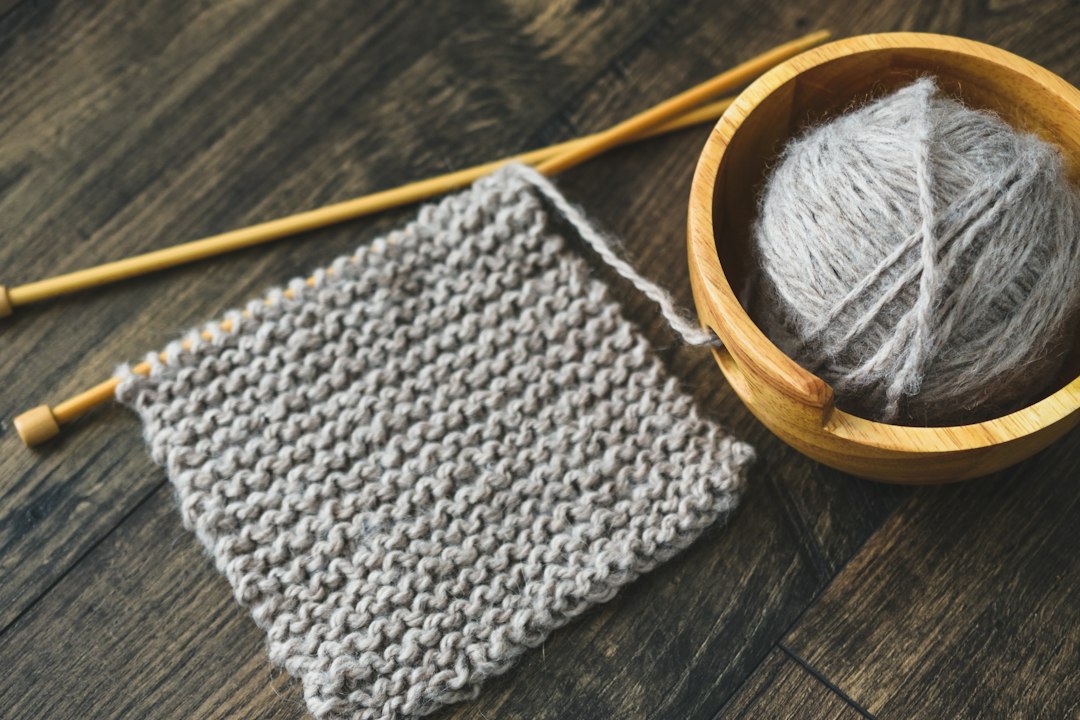
Once it’s dry, lay a ruler flat across the middle of the swatch, away from the curling edges, and count stitches and rows across a full 4 inch span. Compare that number to the pattern’s stated gauge. If you’re getting more stitches per 4 inches than the pattern calls for, size up your needle or hook. Fewer stitches means sizing down.
The Craft Yarn Council itself is clear that the category chart is a guideline, not a guarantee. Your personal tension is what actually determines the finished fabric, which is exactly why the swatch step never gets to be optional.
A resource worth bookmarking while you practice: the free pattern library filters projects by weight, so you can browse patterns built specifically for the skein in your hands.
Machine-washable yarns matter here too, since a blanket or baby item swatched and blocked in a machine-washable fiber will hold its gauge through repeated laundering better than a delicate hand-wash-only skein subjected to the same routine.
Why the Standard Exists, and Where It Falls Short
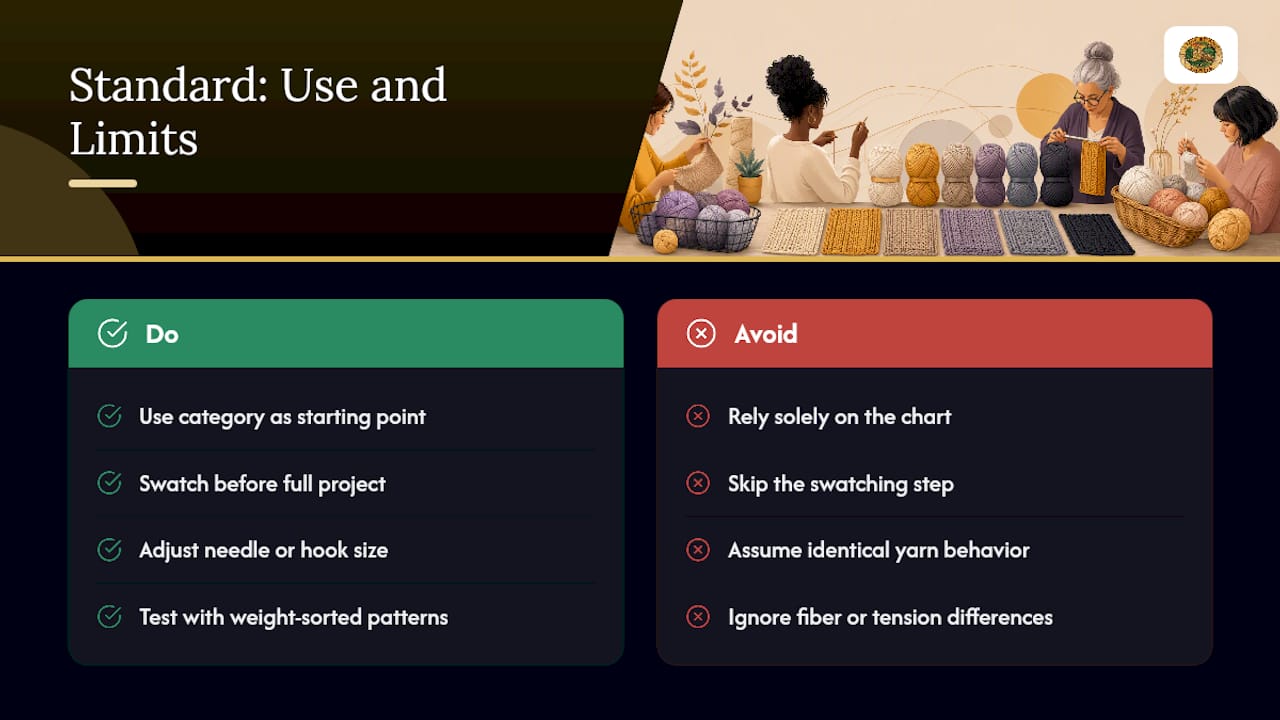
The eight-category system exists so a designer in one state, a mill in another, and a knitter working from a printed pattern can all agree on what “worsted” means without ever speaking to each other. That shared shorthand is genuinely useful. It’s why a Category 4 label means roughly the same thing whether the yarn came from a big box store or a specialty shop.
But the chart was never meant to replace judgment. Fiber content, ply structure, and individual tension all push real yarns around inside their assigned category, sometimes by a lot. Treat the numbers as a strong starting point, swatch before committing to a full project, and don’t be afraid to size up or down a needle or hook when a specific skein asks for it. Lion Brand’s weight-sorted patterns exist precisely so makers can test that judgment against yarns built for exactly the category they’re working in.
Shop Lion Brand Yarn Across Every Weight Category
A wide range of yarn is available spanning all eight standard categories, from delicate lace to jumbo arm-knitting skeins, plus patterns and kits sorted by weight for convenient project matching.

A few standouts worth a look depending on what you’re making. Hometown works well for accessible super bulky projects where speed and texture matter more than fine detail. Wool-Ease offers a versatile medium weight suited to everyday garments and blankets alike. Fishermen’s Wool® Yarn is a 100% wool option built for classic sweaters, mittens, and outdoor wear that needs to hold up.
For a lighter weight garment, the Knit Kit – The Lace Pullover pairs well with a DK weight skein, and worsted weight loyalists will find a reliable match in Vanna’s Choice Yarn. Browse the full range and shop yarn by weight to find the skein that fits the project already in your head.
Sources
Standard Yarn Weight System | Welcome to the Craft Yarn Council
Yarn Weight Chart Guide: Categories 0 to 7, Gauge, WPI and Ply Explained
FAQ
Can you give me a list of yarn types?
Yarn types are typically grouped by weight into eight categories: Lace (0), Super Fine/Fingering (1), Fine/Sport (2), Light/DK (3), Medium/Worsted (4), Bulky (5), Super Bulky (6), and Jumbo (7), each with its own common aliases across markets.
Where can I find a printable yarn weight chart?
The Craft Yarn Council publishes the standard chart that most printable versions online are based on, and the data table in this guide covers the same eight categories with gauge, needle, hook, and WPI figures in one place.
How do I figure out the weight of yarn without a label?
Wrap the yarn snugly around a ruler or pencil, count the wraps that fit in exactly 1 inch, then match that count to the Craft Yarn Council’s WPI ranges; for textured yarn, average counts from a few spots and confirm with a small swatch.
What is category 7 yarn?
Category 7 is Jumbo, the thickest standard weight, typically running 1 to 4 wraps per inch and used for arm knitting and oversized blankets, often without needles or hooks at all.
What weight yarn should a beginner start with?
Category 4 (Medium/Worsted) is the most common starting point because it knits up at a moderate pace, shows stitches clearly enough to catch mistakes, and has the largest selection of beginner patterns, including many in Lion Brand’s free pattern library.
