Start Fast: Crochet Crop Top Patterns for Beginners
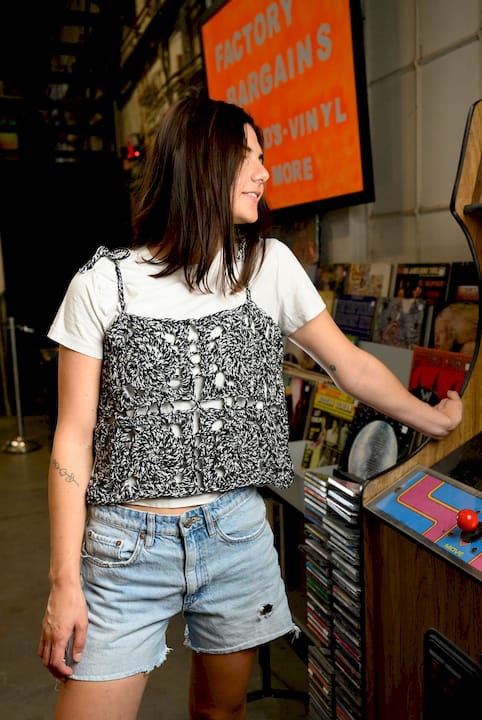
Image: Granny Square Tied Top
This roundup gathers free and paid crochet crop top patterns across halter, bralette, tank, and lacy styles, plus the yarn, fit, and pattern-selection know-how to finish one you’ll actually wear. Start by picking a pattern marked “beginner” or built with no-sew, seamless construction, then make a gauge swatch before casting on a single stitch of the real thing.
Pattern selection should prioritize clear stitch and row counts, size-inclusive measurements, and visual guides to ensure proper fit and construction, especially for beginners.
Focus on yarns made from breathable fibers like cotton, linen, or bamboo blends, with weight choices matching the pattern’s recommendations for the desired drape and coverage.
Accurate measurements and a proper gauge swatch are essential to avoid sizing issues, with rounding up preferred when measurements fall between size options.
Starting with no-sew, seamless, or top-down construction methods simplifies fitting and minimizes mistakes for first-time garment makers.
Pairing patterns with recommended yarns and matching fiber and weight helps create fabric that fits well and looks as intended.
Table of Contents
Crochet Crop Top Patterns by Style
Crop tops fall into a handful of recognizable silhouettes, and knowing which one you want narrows the search fast. Halters wrap around the neck and leave shoulders bare, bralette styles rely on structured stitch panels for shape, tanks use straight straps for coverage, and lacy or square-neck designs lean on openwork for a breezier look. Free crochet patterns dominate the halter and bralette categories, while paid designs tend to offer more polished grading and printable schematics.
Halter crop tops: These typically start with a foundation row across the back and work upward, joining at the neck.
Bralette styles: Built with fitted rib or shell-stitch panels, bralette patterns rely on trying the piece on as you go rather than trusting finished measurements alone.
Tank-style tops: Straight straps and a simple body make tanks the easiest style to modify.
Square-neck and v-neck tops: These need more precise row counting around the neckline shaping, so they suit someone who has finished at least one crochet garment already.
Lacy and boho crochet crop tops: Openwork stitches like shells, V-stitches, or filet grids create the airy, festival-ready look many summer makers want, though dropped stitches are harder to spot mid-project.
Striped and colorblocked designs: These use color changes instead of shaping to add visual interest, which keeps the stitch count simple while still looking custom-made.
Favor patterns that pair written instructions with a photo tutorial or schematic diagram over text-only versions. A visual reference catches construction mistakes before they compound into a dozen rows of wasted work.
Why Beginners Should Start With These Constructions
Three construction methods make crop tops realistic first garments instead of frustrating ones. No-sew designs work the entire top in one continuous piece, so there’s no seaming step where alignment errors can hide. Seamless top-down construction starts at the neckline and increases outward, letting you try the piece on at every stage to check fit before committing to length. Two-panel construction joins a front and back panel with a few seams. It’s slightly more finishing work, but each panel is small enough to fix quickly if you miscount a row.
Simple constructions paired with a gauge swatch produce better outcomes for new crocheters than jumping into a heavily shaped pattern on the first try.
When comparing patterns, look for:
Clear stitch and row counts at every stage, not just “repeat until desired length.”
Size-inclusive charts that list finished bust and length measurements, not just S/M/L labels.
A photo or video walkthrough for at least the trickiest steps, like strap placement or neckline shaping.
Pro Tip: Choose a pattern with adjustable ties or an elastic-band finish at the hem. It turns a fixed-size garment into one you can fine-tune after trying it on, which forgives a slightly-off gauge swatch.
Picking the Right Yarn and Hook for Summer Wear
Plant-based fibers outperform wool blends for crop tops because they breathe and hold their shape without stretching out in humidity. Cotton and linen are the most commonly recommended fibers for summer tops thanks to their crisp stitch definition, and bamboo blends add drape without sacrificing breathability. Lion Brand’s 24/7 Cotton Yarn and Coboo Yarn both fit this brief, giving you the structure lacy stitches need while staying cool against skin.
Yarn weight changes the fabric more than most beginners expect. Fingering and sport weights produce a lightweight, close-fitting drape suited to bralette styles, while DK and worsted weights build sturdier fabric better suited to tanks with more coverage. Swapping a pattern’s called-for weight for a different one alters both drape and finished size significantly, so treat a substitution as an advanced move that requires re-swatching, not a simple one-for-one swap.
Match your hook to the pattern’s gauge, not the label on the yarn skein. Beyond yarn and hook, keep these on hand:
A flexible tape measure for checking finished measurements as you go.
Stitch markers to track increases or repeat points.
A tapestry needle for weaving in ends and seaming panels.
Getting the Fit Right: Measuring, Gauge, and Sizing
Fit problems almost always trace back to two things: measurements taken incorrectly and gauge swatches skipped entirely. Fix both before you start the body of the garment.
Measure bust, underbust, and torso length while wearing the undergarments you plan to pair with the finished top. Small differences in support or padding can shift a bust measurement by more than an inch, which is enough to push you into the wrong size bracket entirely.
Make a 4×4 inch (10×10 cm) gauge swatch before casting on the real project. Count stitches and rows across that swatch and compare them to the pattern’s stated gauge. If your count runs off, switch hook sizes rather than pushing forward with the wrong tension — a half-size larger or smaller hook is usually enough to correct it.
When your measurement falls between two listed sizes, round up. Industry convention favors sizing up over down, since taking in extra fabric with a few decreases is far easier than trying to stretch a top that’s already too small.
Take a well-fitting, unpadded bra for the measuring step specifically. It gives a consistent baseline that padded or wireless styles don’t, and it matches the reference point most published size charts assume.
Pro Tip: Try the top on at each major milestone, right after the ribbing, again at the underarm, and once more before starting the hem, rather than waiting until the last row to find out something’s off.
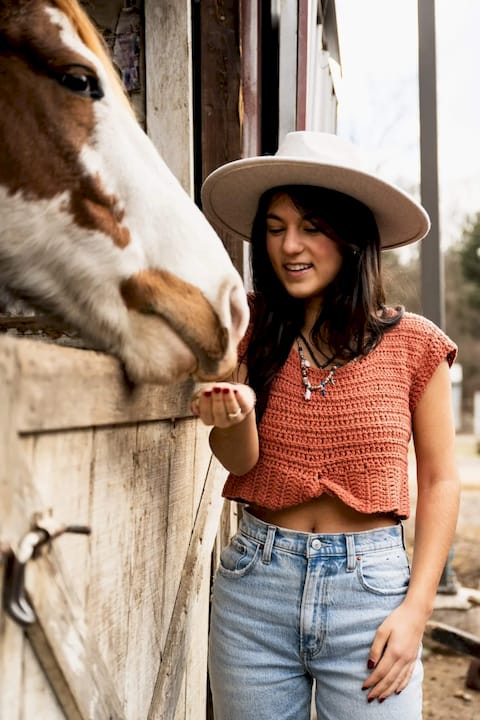
Image: Chickadee Crop Tee
Your 7-Point Checklist Before You Start a Pattern
Run through this list before downloading or buying any pattern. It takes two minutes and saves hours of frogged rows later.
Skill level matches your experience. Don’t start with an “intermediate” lace pattern if this is your first garment.
Size range covers your measurements, with finished garment measurements listed, not just body sizes.
Gauge and yarn weight are stated clearly, not buried in a note at the bottom.
Yardage requirements are listed for your specific size, not just a single estimate for “average” builds.
Schematic or video walkthrough is included for shaping steps.
Shaping instructions are written in full stitch counts, not vague phrases like “continue increasing.”
The designer offers support or errata notes for common questions on the pattern.
Red flags worth walking away from: no gauge listed anywhere, missing finished measurements, or stitch counts that jump without explanation between rows.
Lion Brand Resources for Your Crop Top Project
A free pattern library that filters by skill level and project type is available, with many entries including downloadable PDFs alongside photo or video guidance, which matters most when you’re testing a construction method for the first time. Pattern pages like the Chickadee Crop Tee show the level of detail and schematic support you can expect across the catalog.
For crop tops specifically, 24/7 Cotton Yarn and Coboo Yarn both give the breathability and stitch clarity summer garments need. If you’d rather skip the yarn-matching guesswork entirely, Lion Brand’s curated knit and crochet kits pair a pattern with the exact yarn amounts required, which removes one of the more common beginner stumbling blocks.
A Crop Top Is the Right First Garment to Learn On
A crop top teaches the skills that matter most in garment crochet: reading gauge, shaping around a body, and finishing edges cleanly, all without the time investment of a full sweater. That makes it a smarter proving ground for new techniques than most patterns marketed as “beginner sweaters,” which often hide shaping complexity a crop top simply doesn’t have.
Once the base pattern fits, small changes make it yours: lengthen the body, swap straps for ties, or add a shell-stitch trim along the hem. Pattern libraries and kits from yarn companies give a low-risk way to test that first modification.
Start Your Crop Top With a Pattern and Yarn That Match
Choosing yarn and a pattern separately is where most first-time garment projects stall, since gauge, fiber, and drape all have to line up before a single stitch goes right. Matching yarn and pattern on dedicated pattern pages helps reduce mismatch, so the drape in photos better reflects the finished fabric.
The Summer Blush Tank kit pattern is built around straightforward straps and a clean body, making it a dependable first project for anyone still building confidence with garment shaping. The I Just Wanna Dance Crop Top pattern comes with yarn recommendations already suited to warm-weather drape, so there’s no guessing about fiber substitutions. For makers who want visual texture without added shaping complexity, the Electric Sun Tee kit pattern uses color changes to do the design work instead. Pick whichever silhouette matches the style guidance above, add it to your cart with the recommended yarn, and start your gauge swatch tonight.
Sources
5 easy tips for crocheting garments that fit — Nicki’s Homemade Crafts
How to crochet clothes that actually fit — Two Brothers Blankets
FAQ
What Skill Level Do I Need for a Crochet Crop Top?
Most crop tops suit confident beginners, especially no-sew or seamless top-down designs with clear stitch counts and a photo or video walkthrough.
What Yarn Weight Works Best for Summer Crop Tops?
Fingering and sport weights give a lighter, closer-fitting drape, while DK and worsted weights build sturdier fabric for tank-style coverage; match whatever weight the pattern calls for rather than substituting freely.
How Do I Know What Size to Crochet?
Measure your bust, underbust, and torso length while wearing the undergarments you’ll pair with the finished top, and round up to the next size if your measurement falls between two.
Do I Really Need to Make a Gauge Swatch?
Yes. A 4×4 inch swatch tells you whether your tension matches the pattern before you commit dozens of rows to the wrong hook size.
Where Can I Find Beginner-Friendly Crop Top Patterns?
Lion Brand’s free pattern library filters by skill level and includes downloadable options, and several independent designers offer free patterns with video tutorials and inclusive sizing.
