What Is a Yarn Haul? A Crafter’s Complete Guide
A yarn haul is a collection of yarn purchased during a single shopping trip or online order, typically shared with the crafting community through photos, videos, or blog posts. You’ll find hauls everywhere crafters gather online: YouTube videos with titles like “Massive Yarn Haul,” Reddit photo threads in communities like r/knitting, Instagram reels, and TikTok clips. This guide covers what hauls are, why crafters share them, how to plan one smartly, and how to keep your stash from taking over the spare bedroom. Lion Brand’s free pattern library and curated kits make it easy to turn any haul into a finished project.
Table of Contents
Quick definitions: skein, ball, hank, and what “yarn” means in slang
Yarn crawls and yarn trucks — how community events create hauls
Trusted Lion Brand resources for turning haul yarn into projects
Why do crafters share yarn hauls?
Hauls are shared for inspiration, validation, documentation, and sometimes promotion — and often all four at once. The joy of a yarn haul is both tactile and emotional; new skeins can spark project ideas and rekindle creative motivation that a half-finished WIP cannot.
Common motives behind haul posts include:
Creative inspiration: Showing colorways and textures that others might not have discovered yet.
Show-and-tell: The simple pleasure of sharing a good find with people who genuinely care.
Shop support: Small yarn stores and indie dyers benefit when creators tag them in haul content.
Project documentation: Recording what was bought, in what quantity, before the label gets lost.
Social connection: Haul posts invite comments, pattern suggestions, and community conversation.
Long-form YouTube haul videos tend to cover the full story — where the creator shopped, why they chose each skein, and what projects they have in mind. Reddit photo posts are faster and more casual, usually just a flat lay with a short caption. Sale-driven hauls, like those posted after large annual yarn sales, often focus on bargains and quantity.
Pro Tip: When watching a yarn haul video, check the description box first. Many creators list brand, colorway, weight, and yardage there — saving you from hunting through a 20-minute video for the one skein you want to identify.
Where you’ll find yarn hauls — formats and platforms
Hauls live across several formats, each with its own level of detail and its own strengths.
YouTube videos: The most detailed format. Creators typically show each skein up close, discuss fiber content and planned projects, and link products in the description. Search “yarn haul” or “yarn haul videos” to find hundreds of examples.
Instagram and TikTok reels: Short-form and visually driven. Great for color inspiration; captions often omit yardage or weight details.
Reddit photo threads: Quick and community-focused. Posters share flat-lay images and invite pattern recommendations. Subreddits like r/knitting and r/crochet host these regularly.
Blog posts: Longer written hauls that often include price breakdowns, project plans, and storage notes. Retail sale events — like annual big-chain yarn sales — frequently generate detailed blog hauls showing bargains and planned uses.
Live-stream shopping sessions: Real-time hauls where viewers watch purchases happen and ask questions in the chat.
Platform norms shape what information appears. YouTube creators tend to include brand names and yardage in descriptions because viewers ask for them. Instagram captions are shorter and may skip those details entirely, so texture close-ups and color are the main value there.
How a ‘haul’ differs from a ‘stash’ or ‘collection’
These three terms get mixed up constantly, but they mean different things in practice.
Haul: The yarn acquired during one specific shopping event. It’s a moment in time — what you bought today, this weekend, or from that one online order.
Stash: The total supply of yarn a crafter has on hand, accumulated over months or years. Every haul eventually becomes part of the stash.
Collection: A curated or themed subset of yarn — organized by fiber, colorway, or project type. Not every crafter uses this term, but those who do usually mean something intentional and edited.
The practical difference matters for budgeting and storage. A haul is a purchase decision; a stash is a storage challenge; a collection is a curation project. Knowing which problem you’re solving helps you shop and organize more deliberately.
Quick definitions: skein, ball, hank, and what “yarn” means in slang
Haul posts use yarn terminology interchangeably, which confuses beginners. Here’s what each term actually means:
Skein: A loosely wound, oblong bundle of yarn — the most common retail format. Lion Brand yarns are sold as skeins.
Ball: A round, wound form of yarn. Some crafters wind skeins into balls for easier working.
Hank: A large, loosely twisted loop of yarn that must be wound before use. Common with hand-dyed indie yarns sold at crawls and fiber festivals.
Cake: A flat-bottomed, cylindrical wind produced by a ball winder. The term appears in haul posts when crafters have pre-wound their yarn.
One more thing worth knowing: in everyday slang, “yarn” means a long, rambling story or tall tale — as in “spinning a yarn.” In a crafting context, it always means fiber. The slang meaning occasionally shows up in haul video titles as a pun, which is how you end up with titles like “Spinning a Yarn About My Haul.”
Pro Tip: When evaluating any skein in a haul post or in person, check four things on the label: fiber content, yarn weight, yardage per skein, and recommended needle or hook size. Those four numbers tell you whether the yarn will actually work for your planned project.
Yarn crawls and yarn trucks — how community events create hauls
Two community-specific events reliably produce haul-worthy purchases: yarn crawls and yarn trucks.
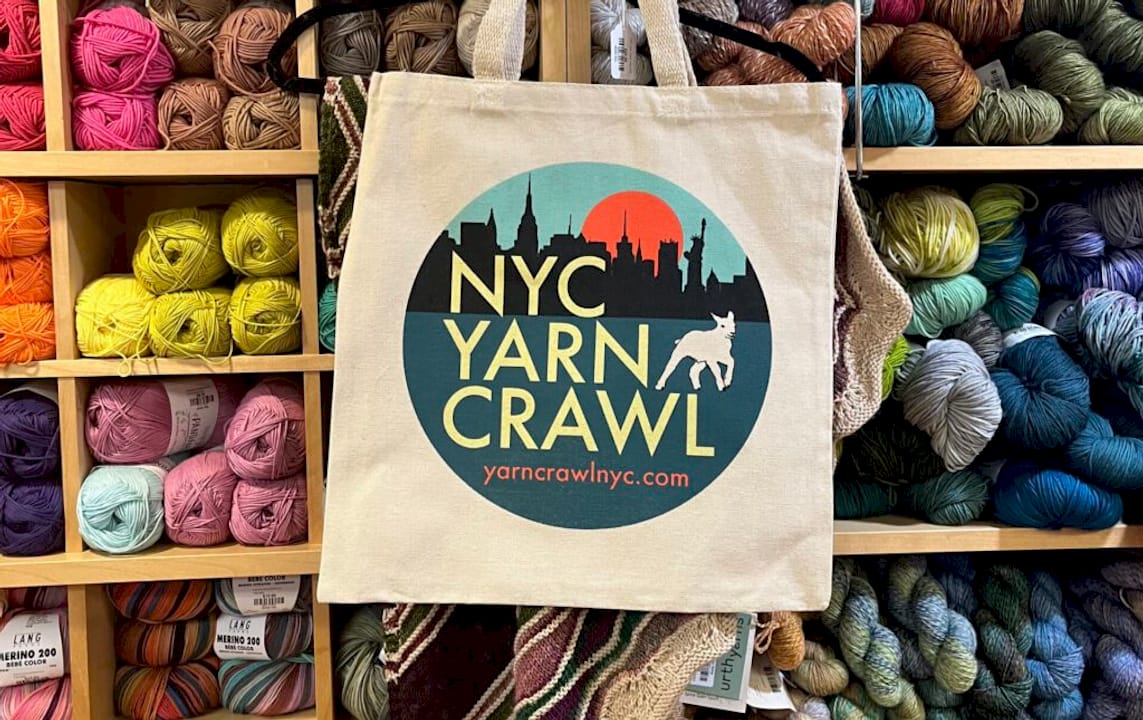
A yarn crawl is an organized, multi-shop event where crafters visit several local yarn stores over a set period, often using a passport system for discounts, freebies, and prizes. The Rose City Yarn Crawl in Portland, for example, is a four-day annual event that has run for nearly two decades, connecting fiber enthusiasts to local shops across the region. Yarn crawls are designed to foster connection and community more than pure retail — they put crafters in the same room as shop owners, designers, and hand-dyers.
A yarn truck is a mobile retail unit — a yarn shop on wheels — that travels to events, street fairs, and specific locations to sell curated fibers and notions. Trucks like the Yarn Adventure Truck specialize in hand-dyed yarns from multiple indie dyers, offering limited runs that are genuinely hard to find elsewhere. The truck model emerged partly to reach crafters who lack easy access to brick-and-mortar yarn shops.
What both events have in common: exclusive or limited-release yarns that turn into haul posts almost immediately. Attendees buy special colorways, passport prizes, and trunk-show exclusives — then photograph everything when they get home.
Pro Tip: Follow shop social media accounts and vendor festival pages to track yarn truck schedules and crawl dates in advance. Limited releases sell out fast, and knowing the schedule helps you budget instead of impulse-spending at the door.
How to plan, buy, document, and use a yarn haul
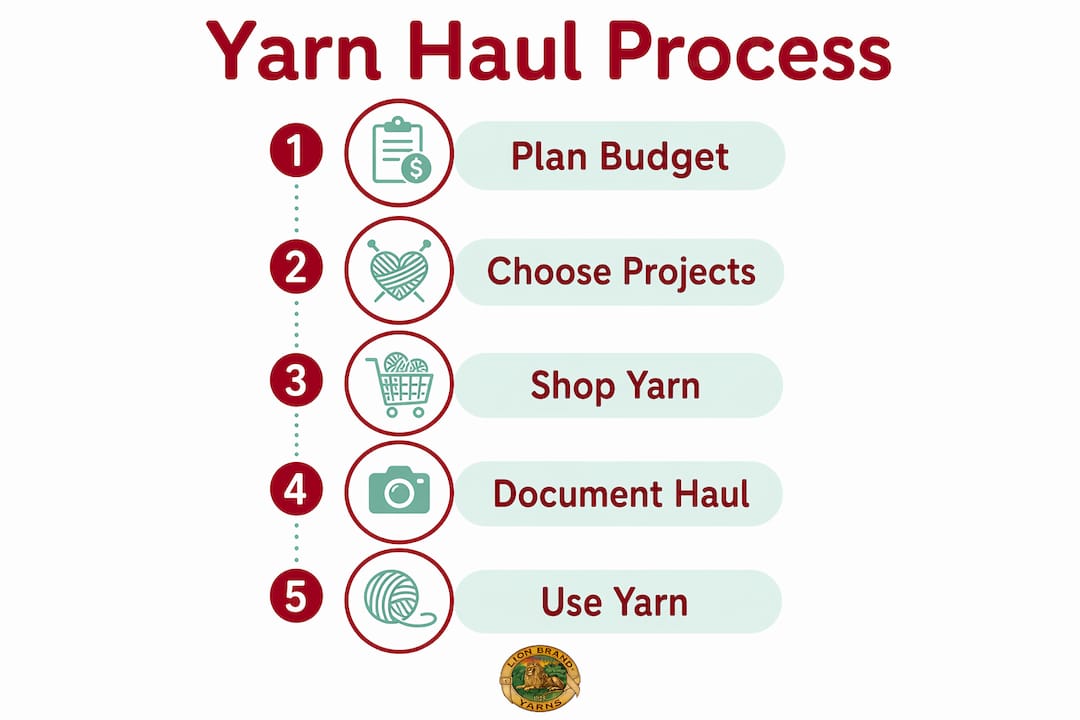
A good haul starts before you walk into a shop or open a browser tab. Here’s a practical workflow:
Before the haul:
Set a firm budget and write it down.
List two or three planned projects and note the yarn weight and yardage each requires.
Check your existing stash for duplicates — buying a third worsted-weight gray when you already have two is a stash problem, not a haul.
During the haul:
Note fiber type, yarn weight, yardage, and dye lot for every skein you consider.
Photograph the label before you buy, not just after.
Buy a single skein to test before committing to a full project quantity.
After the haul:
Label and store new yarn in breathable bins, away from moisture.
Documenting haul items — photographing labels and recording yardage — makes it far easier to match yarn to patterns later.
Use Lion Brand’s free pattern library to match each skein to a project immediately, before it disappears into the stash indefinitely.
Experienced crafters recommend a stash ratio to keep purchases useful:
| Haul Category | Suggested Ratio | What It Means |
|---|---|---|
| Planned project yarn | 70% | Yarn tied to a specific pattern and start date |
| Backup or versatile yarn | 20% | Neutral, multi-use skeins for future projects |
| Dopamine or impulse buys | 10% | The one colorway you couldn’t walk past |
Pro Tip: When unpacking an online order, squeeze each skein gently and give it a light stretch. You’re checking for consistent twist, even tension, and no musty smell — all quick indicators of quality and proper storage before it reaches you.
Sustainability, etiquette, and keeping hauling joyful
Hauling can stay joyful when it’s paired with a few practical limits. The one-in, one-out rule is a durable stash-management tactic: for every new skein brought in, donate, gift, or use an existing one. Some crafters document intentional or minimal hauls as part of a wider focus on mindful collecting and reduced spending.
Responsible hauling practices worth adopting:
Apply the one-in, one-out rule consistently, not just when the closet gets full.
Check a maker’s resale policy before flipping limited-release yarns — many indie dyers ask buyers not to resell.
Buy local when possible; yarn crawls and yarn trucks are built on the health of local shops.
Favor ethically produced fibers when that matters to your values.
Store yarn in breathable bins or bags, label fiber content clearly, and keep it away from direct sunlight and moisture.
Pro Tip: Turn excess yarn into donation-ready kits — pair a skein with a printed pattern and a hook or needle, then donate to a community center, school, or crafting group. It circulates fiber in the community and clears space without waste.
Trusted Lion Brand resources for turning haul yarn into projects
Lion Brand has been a trusted U.S. resource for knitters and crocheters for more than 145 years, offering an extensive catalog of yarns, thousands of free patterns, and curated kits that make it straightforward to match haul yarn to a finished project.
After a haul, these Lion Brand resources are worth bookmarking:
Embroidered Gift Bags: A Lion Brand product suited to embroidery and small embellishment projects — a practical use for smaller haul quantities that don’t add up to a full garment.
DIYarn®: Lion Brand’s DIYarn® is a hands-on crafting product that pairs well with haul-based small projects and kits.
Free pattern library: Thousands of patterns sorted by skill level, project type, and yarn weight. Search by the weight of your haul yarn to find a match in minutes.
Knitting and crochet kits: Lion Brand’s curated kits include yarn and a pattern in one package — useful as a model for building your own haul-to-project bundles.
Lion Brand’s catalog spans every yarn weight from fingering to jumbo, in fibers including cotton, acrylic, merino wool, alpaca, and recycled blends — making it one of the most practical places to find a pattern that matches whatever weight you brought home from a haul.
How yarn hauls evolved in crafting culture
The haul as a content format predates social media. Crafters have always shown off new purchases at guild meetings and knitting circles — the show-and-tell instinct is older than YouTube. What changed in the mid-2000s was the platform. Haul videos emerged on YouTube as a distinct genre: a vlogger shows items from a recent shopping trip, sometimes reviewing each one. The format spread quickly from fashion and beauty into crafting communities, where the tactile nature of yarn made it especially well-suited to video.
By the early 2010s, yarn haul videos were a recognizable subgenre, with crafters posting after major sales, fiber festivals, and yarn crawls. The rise of Instagram and later TikTok compressed the format into shorter clips, but the core impulse stayed the same. Today, a haul can be a 30-second reel or a 45-minute YouTube deep-dive — the platform shapes the length, not the intent.
Key Takeaways
A yarn haul is a single shopping event’s worth of yarn, shared with the crafting community for inspiration, documentation, and connection — and managed best with a clear budget and a 70/20/10 stash ratio.
| Point | Details |
|---|---|
| Core definition | A yarn haul is yarn bought in one shopping event, often shared on YouTube, Reddit, or Instagram. |
| Haul vs. stash | A haul is a moment; a stash is the accumulation; a collection is a curated subset. |
| Stash ratio | Aim for 70% planned project yarn, 20% backup, and 10% impulse buys. |
| Document everything | Photograph labels and record yardage immediately — it makes pattern-matching far easier later. |
| Lion Brand resources | Use Lion Brand’s free pattern library and kits to match haul yarn to projects before it stalls in storage. |
Hauling culture deserves a thoughtful take
Hauling is a legitimate creative practice, not a guilty pleasure that needs defending. The crafting community has built something genuinely valuable around the shared ritual of showing new yarn: it supports small shops, introduces makers to new fibers, and keeps the social side of a largely solitary hobby alive. The problem isn’t hauling. It’s hauling without intention.
The crafters who get the most out of their hauls treat each purchase as a commitment, not a possibility. They match yarn to patterns before it goes on the shelf, use tools like Lion Brand’s pattern library to find the right project for the right weight, and support local makers through crawls and trucks rather than defaulting to whatever’s cheapest. That approach keeps the stash useful, the budget intact, and the joy of a new skein from curdling into guilt.
Lion Brand: yarn and patterns for every haul
Whether a haul came from a yarn crawl, a fiber festival, or an online cart that got a little out of hand, the next step is the same: find the right pattern and start making something. Lion Brand’s free pattern library holds thousands of options sorted by yarn weight, skill level, and project type — so matching a worsted-weight haul skein to amarket bag pattern or a bulky haul find to a cozy wrap takes minutes, not hours.
Lion Brand’s catalog covers every weight from fingering to jumbo, in fibers from 24/7 Cotton to Wool-Ease to Feels Like Butta — plus seasonal items like the Santa Sack for gift-ready haul projects. Browse the full collection at lionbrand.com and turn your next haul into something you’ll actually finish.
FAQ
What is a bunch of yarn called?
A bundle of yarn goes by several names depending on its form: a skein is the standard oblong retail shape, a ball is a round wound form, and a hank is a large loose loop common with hand-dyed yarns that must be wound before use.
What does “yarn” mean in slang?
In everyday slang, “yarn” means a long, rambling story or tall tale, as in “spinning a yarn.” In crafting contexts, the word always refers to fiber used for knitting, crocheting, or weaving.
What are the benefits of yarn crawls?
Yarn crawls connect crafters to local yarn shops, indie dyers, and designers through a multi-stop passport event that often includes exclusive discounts, limited-release yarns, and prizes — making them one of the best sources of haul-worthy finds.
What is a yarn truck?
A yarn truck is a mobile retail shop on wheels that travels to events and street fairs to sell curated fibers and notions, often specializing in hand-dyed and indie dyer yarns that are hard to find in standard retail stores.
How do you start a yarn haul as a beginner?
Set a budget before you shop, identify one or two planned projects and their yarn weight requirements, and check your existing stash for duplicates first. Lion Brand’s free pattern library is a practical starting point for matching yarn weight to a beginner-friendly project before you buy.
Useful sources and where to find haul examples
Staying current on haul culture and community events is easier when you know where to look.
Lion Brand pattern library and kits: The most direct way to match haul yarn to a project. Search by weight or fiber at lionbrand.com.
Rose City Yarn Crawl (rosecityyarncrawl.com): One of the longest-running U.S. yarn crawls; their Basics page explains the passport system and what to expect at crawl events.
Local yarn shop social media: Instagram and Facebook pages for local yarn stores (LYS) are the fastest way to find crawl dates, trunk shows, and yarn truck schedules in your area.
Fiber festival vendor pages: Sites like the AL Fiber Festival list mobile vendor schedules, including yarn trucks carrying limited indie-dyer releases.
Reddit communities: r/knitting and r/crochet regularly host haul photo threads with community pattern recommendations.
One practical habit worth building: when you unpack a haul, save a photo of every label to a dedicated phone album or folder. That 30-second step makes it possible to search for patterns by yardage and weight weeks later, when the physical label has long since disappeared.

