Textured Yarn: What It Is and How It Works
What is textured yarn?
Textured yarn is a continuous multifilament yarn that has been permanently altered after extrusion through heat, air, or mechanical deformation to produce crimps, loops, or coils along the filament lengths. The result is a yarn with added bulk, stretch, opacity, and softness that flat synthetic filaments simply cannot deliver on their own.
Key characteristics that define textured yarn:
Permanent structural change: The filament’s molecular and geometric structure is modified permanently, not just surface-coated or treated
Three-dimensional form: Crimps, coils, spirals, and loops replace the original straight, parallel filament alignment
Increased bulk and opacity: Air gaps between loops and crimps create loftiness and reduce transparency
Spun-like hand feel: Textured yarn approaches the softness and warmth of natural fibers like cotton and wool
Stretch and recovery: Depending on the texturing method, yarns gain elasticity ranging from moderate to high elongation
The contrast with flat, untextured yarn is stark. Flat filament yarns are smooth, lustrous, and slippery, with no meaningful stretch or bulk. Texturing converts that flat form into something that behaves far more like a natural fiber in finished fabric.
Why textured yarn outperforms flat synthetic filaments
Texturing solves a cluster of problems that flat synthetic filaments carry by default. Slipperiness, poor moisture management, and a cold, artificial feel all stem from the smooth, parallel structure of unmodified filaments. Adding crimps and loops changes the physics of the fabric entirely.
Better coverage: Increased bulk raises opacity, so fabrics cover more without added weight
Improved moisture handling: Air gaps and loops allow moisture transport and breathability that flat filaments block
Thermal insulation: Trapped air between loops lowers thermal conductivity, making textured fabrics warmer
Reduced pilling: The interlocked loop structure resists the fiber migration that causes pilling on smooth synthetics
Comfort against skin: The soft, irregular surface feels closer to cotton or wool than to raw polyester
Pro Tip: Controlling heater temperature during texturing is critical. Improper temperature or tension can erase the texture entirely, leaving a flat yarn that defeats the purpose of the process.
How textured yarn is made: the main methods
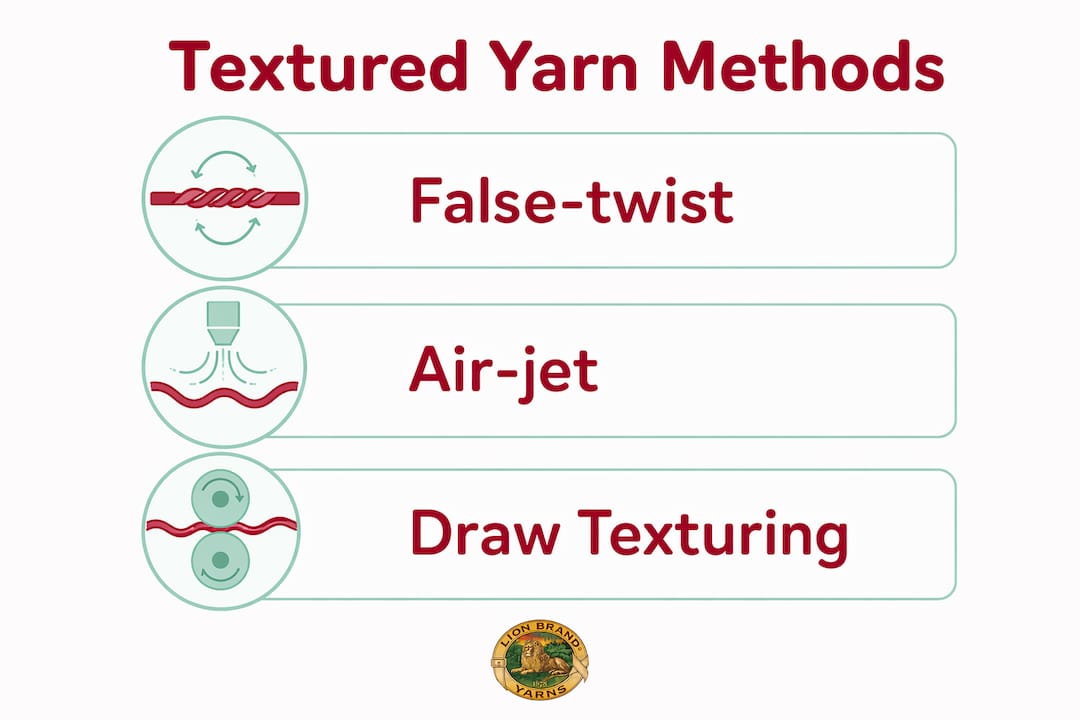
Three primary industrial techniques produce the majority of textured yarns on the market today.
| Method | Mechanism | Heat Required | Best Fiber Types |
|---|---|---|---|
| False-twist texturing | Twist, heat-set, untwist to create coiled crimp | Yes | Polyester, nylon (thermoplastics) |
| Air-jet texturing (ATY) | Turbulent air jets form loops and entanglements | No (cold process) | Polyester, nylon, rayon, glass filaments |
| Draw texturing (DTY) | Drawing and texturing combined at ~1,000 m/min | Yes | Polyester, nylon |
False-twist texturing is the most widely used method. The yarn is twisted under heat, then heat-set, then untwisted, leaving a permanent coiled crimp. The result is a stretch yarn with uniform bulk and good elasticity, widely used in hosiery, activewear, and intimate apparel.
Air-jet texturing works differently. Turbulent air jets create loops and entanglement points called air tacks without any heat, which means the process works on non-thermoplastic fibers like rayon and even glass filaments. That flexibility makes air-jet texturing valuable for technical textiles where heat-setting is not an option.
Draw Textured Yarn (DTY) combines drawing and texturing in a single continuous process running at approximately 1,000 m/min, with up to 384 yarn paths running in parallel on industrial machines. The speed and precision required make heater temperature control the single most critical variable in DTY production.
Pro Tip: Air-jet texturing is the go-to method when working with non-thermoplastic fibers. False-twist and draw texturing require heat-setting, which limits them to thermoplastics like polyester and nylon.
Physical properties that set textured yarn apart
Once textured, a yarn behaves differently in almost every measurable way compared to its flat precursor.
| Property | Textured Yarn | Flat (Untextured) Yarn |
|---|---|---|
| Bulk and loft | High | Minimal |
| Opacity | High | Low (often transparent) |
| Stretch and recovery | Moderate to high | Very low |
| Thermal insulation | Improved (air gaps) | Poor |
| Abrasion resistance | Improved | Lower |
| Tensile strength | Slightly reduced | Higher |
| Hand feel | Soft, spun-like | Smooth, slippery |
Fabrics made from air-jet textured yarns show considerably higher thermal resistance and reduced air permeability compared to fabrics made from parent yarns. Tensile and bursting strengths decrease slightly with texturing, but abrasion resistance improves. That trade-off is acceptable in most apparel and home textile applications, where comfort and durability matter more than raw tensile strength.
Where textured yarn shows up in finished products
Textured yarn appears across a wider range of products than most crafters realize. Its combination of stretch, softness, and thermal performance makes it the default choice in several major textile categories.
Activewear and sportswear: DTY and ATY yarns provide the stretch and moisture management that athletic garments require
Intimate apparel and hosiery: False-twist stretch yarns deliver the form-fitting resilience needed in lingerie and stockings
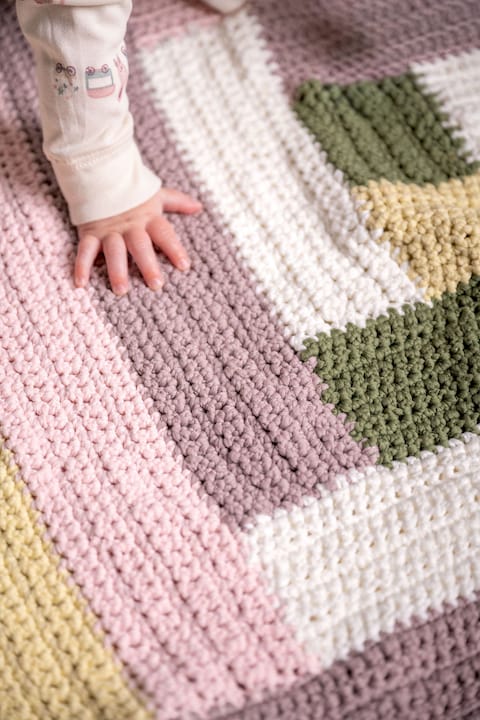
Home textiles: Upholstery, thermal blankets, and knitted home goods rely on textured yarn’s thermal regulation and bulk
Carpets and furnishing fabrics: Bulk yarns produced by air-jet and stuffer-box methods add loft and durability underfoot
Technical textiles: Air-jet textured glass filaments serve in industrial and safety applications where heat resistance matters
Textured yarns balance synthetic durability with the comfort and moisture handling of natural fibers, which is why they appear in everything from athletic shorts to thermal curtains.
Lion Brand and textured yarn in crafting
Lion Brand has been crafting yarn for over 145 years, and textured yarns have always played a role in the collections that crafters reach for first. The tactile quality that texturing creates translates directly into finished projects that feel better, drape better, and hold their shape longer.
For crafters working with textured yarn, Lion Brand offers patterns and products that put those properties to work:
The Boxy Cropped Pullover is a knit project that showcases how surface variation in yarn creates visual depth without complex stitch work
The Bucket Hat gives crafters a structured starting point for exploring what textured yarn does in a finished accessory
Homespun Yarn from Lion Brand was designed specifically to deliver that spun-like, dimensional feel in hand-knitting and crochet projects
The Zip Front Neck Down Cardigan pattern demonstrates how textured yarn adds visual interest to garments without relying on complicated colorwork
Lion Brand’s free pattern library includes thousands of projects sorted by skill level, so whether the goal is a beginner cowl or an advanced textured vest, there is a pattern ready to use.
How textured yarn developed over time
Yarn texturing grew out of a practical problem: synthetic filaments introduced in the mid-20th century were slippery, cold, and uncomfortable against skin. The first commercial texturing patents appeared in the early 1950s, with DuPont filing the foundational air-jet texturing patent in 1951. Early production speeds were modest, around 50 m/min, and compressed air consumption was high.
The technology advanced steadily. By 1978, Heberlain introduced a new jet nozzle design running at 500 m/min with lower air consumption. By 1997, a multiple-nozzle design called the S series pushed production to 800 m/min. Draw texturing followed a parallel development path, eventually reaching the continuous high-speed process running at approximately 1,000 m/min used in modern DTY production. What began as a fix for uncomfortable synthetics became one of the foundational processes in global textile manufacturing.
Key Takeaways
Textured yarn permanently transforms flat synthetic filaments into high-performance fibers with bulk, stretch, and softness that rival natural materials.
| Point | Details |
|---|---|
| Core definition | Textured yarn is a multifilament yarn altered by heat, air, or mechanical deformation to create permanent crimps, loops, or coils. |
| Three main methods | False-twist, air-jet, and draw texturing each suit different fiber types and performance targets. |
| Key property trade-off | Texturing improves bulk, softness, and abrasion resistance while slightly reducing tensile strength. |
| Broad applications | Textured yarn serves activewear, home textiles, carpets, intimate apparel, and technical textiles. |
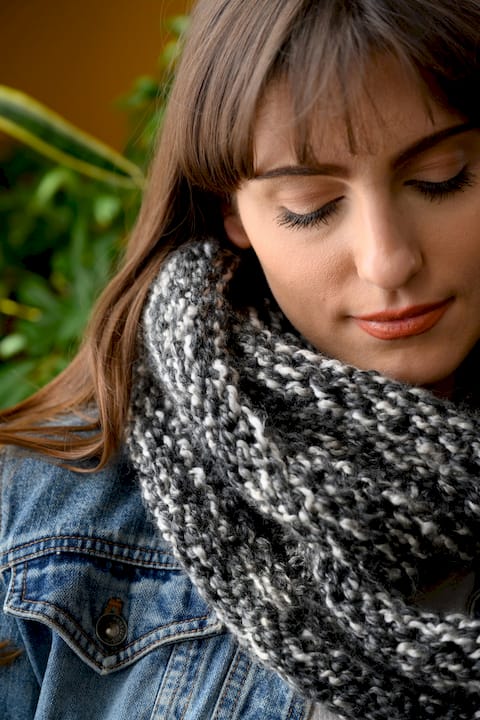
| Crafting relevance | Lion Brand patterns like the Textured Cowl put textured yarn’s dimensional qualities directly into hand-knitting projects. |
FAQ
What is textured yarn?
Textured yarn is a continuous multifilament yarn that has been permanently altered after extrusion through heat, air, or mechanical deformation to add crimps, loops, or coils, resulting in increased bulk, softness, and stretch compared to flat synthetic filaments.
What is the difference between textured and non-textured yarn?
Non-textured (flat) yarn is smooth, lustrous, and slippery with minimal bulk or stretch, while textured yarn has a three-dimensional structure that adds opacity, warmth, elasticity, and a softer hand feel closer to natural fibers.
What are the advantages of textured yarn?
Textured yarn improves fabric bulk, softness, thermal insulation, moisture management, and abrasion resistance, while reducing the slipperiness and transparency common in flat synthetic filaments.
What is an example of a textured yarn?
Draw Textured Yarn (DTY) is one of the most common examples, widely used in sportswear, activewear, and intimate apparel for its stretch, recovery, and spun-like feel.
