
Top Yarns for Crochet Market Bags: Durable, Washable Picks
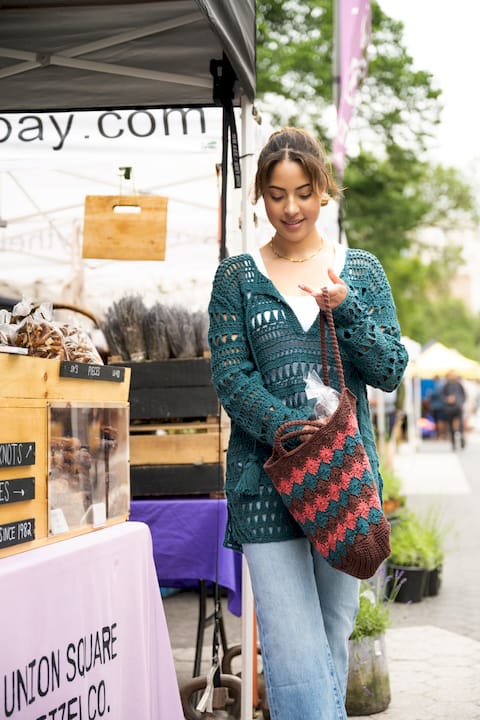
Image: Demure Openwork Top and Harlequin Bag
Mercerized worsted-weight 100% cotton is the best general-purpose yarn for crochet market and tote bags. It holds shape under a full load of groceries, washes clean without drama, and gives stitch definition sharp enough to keep a mesh pattern from collapsing. Here is the quick shortlist before the details:
Primary pick: Mercerized worsted-weight cotton (100% cotton, low elongation, machine-washable)
Secondary pick: Sturdy cotton blend (cotton/acrylic or cotton/polyester) for softer hand with moderate structure
Chunky tote: Ribbon or t-shirt yarn for decorative, quick-build totes that won’t carry heavy loads
Rigid structured bag: Linen or hemp for maximum stiffness and a crisp finished shape
Caution: Unlined 100% acrylic is not recommended for weight-bearing market bags; home stretch tests show acrylic can elongate roughly 60% under a 1,600 g load, versus 28–45% for cotton-based yarns
Lion Brand carries several cotton and cotton-blend lines that fit these categories well. The Crochet Kit -French Market Tote pattern and the Crochet Kit: Produce Bag & Scrubbers are natural starting points for matching yarn to a specific bag style.
Key Takeaways
Mercerized worsted-weight cotton is the most reliable yarn choice for durable, washable crochet market bags, and reinforcing the base and handles matters as much as the fiber itself.
| Point | Details |
|---|---|
| Choose mercerized cotton | 100% mercerized worsted cotton keeps elongation low (roughly 6–10% at break) and holds shape under grocery loads. |
| Run a stretch test first | A swatch elongating under 15% under a 500 g load is suitable for a mesh market bag; above 25%, add a lining. |
| Build a dense base | Work the first 1.5–2 inches in single crochet before opening to mesh; this prevents base sag under weight. |
| Reinforce handles with a box stitch | A box-stitch attachment distributes stress across a rectangle of stitches and prevents handle failure at the join. |
| Lion Brand 24/7 Cotton | Lion Brand’s 24/7 Cotton Yarn is a mercerized, machine-washable worsted-weight cotton suited for market and tote bags. |
Table of Contents
What makes a yarn actually work for a market or tote bag?
Six criteria separate a bag that lasts from one that sags by the third trip to the farmers market.
Stretch under load is the most important. A yarn with high elongation will turn a neat mesh bag into a drooping hammock the moment you add a few pounds of produce. Cotton’s elongation at break runs roughly 6–10%, compared to 20–50% for acrylic, which is why cotton dominates bag-making discussions.
Tensile strength and twist go together. A tightly twisted yarn resists abrasion and holds its structure through repeated loading. Feel the skein: a firm, smooth twist signals strength. A loosely spun, fluffy yarn will pill and weaken at stress points like handle joins.
Stitch definition matters for mesh patterns. A yarn with good definition keeps each chain space crisp so the bag looks intentional rather than sloppy. Mercerization, a finishing process that treats cotton fibers under tension with a sodium hydroxide solution, increases both tensile strength and luster while improving dye uptake. Look for “mercerized” on the label.
Yarn weight and hook size affect density. Worsted weight (size 4) on a 4.0–5.0 mm hook produces a fabric dense enough at the base to resist sagging. Going up to a 5.5 mm hook for the body creates the open mesh that lets a bag breathe without losing structural integrity.
Colorfastness and washability are non-negotiable for a bag that touches food. Check the label for machine-wash approval and look for colorfast dyes. Darker saturated colors sometimes bleed on the first wash.
Pilling resistance is less critical than the others but still worth checking. A yarn that pills quickly looks worn after a few uses. Cotton and linen resist pilling better than most acrylics.
Pro Tip: Before buying a full skein, rub a short length of yarn briskly between your palms for 30 seconds. Significant pilling or fuzz means the yarn will not hold up well at high-friction points like handle joins.
Which fiber families hold up best in a bag?
Cotton and mercerized cotton blends are the right default for most market and tote bags. The Crochetville community consistently names cotton as the preferred fiber for durability, washability, and resistance to stretching. Here is how each fiber family performs:
100% mercerized cotton: Best all-around choice. Low elongation, strong stitch definition, machine-washable, and colorfast. Slightly stiffer hand than blends, which is an advantage for structure.
Cotton blends (cotton/acrylic or cotton/polyester): Softer hand than pure cotton, slightly more stretch. Good for totes that carry lighter loads or for crocheters who want a more flexible finished fabric. Check that the cotton content is at least 50% to keep elongation manageable.
Linen and hemp: Stiff, low elongation, and very strong. Ideal when a rigid, structured bag is the goal. Linen softens with washing and use, but it starts firm. Less widely available in worsted weight.
Ribbon and t-shirt yarn: Chunky, fast to work, and visually striking. Best for decorative totes that carry light items. Not recommended for heavy produce loads because the flat ribbon structure can distort under sustained weight.
100% acrylic (unlined): Not recommended for weight-bearing market bags. The home stretch test data is clear: acrylic elongates significantly more than cotton under load. If acrylic is the only option, use a smaller hook for a tighter gauge, work double-strand, or add a sewn fabric lining.
Recommended Lion Brand yarns for market and tote bags
Lion Brand’s cotton and cotton-blend lines cover every bag style in this shortlist. Below are the picks that match the bag types discussed, with yardage and buying notes.
24/7 Cotton Yarn — best for mesh market bags
This is the flagship pick. 24/7 Cotton is 100% mercerized cotton, worsted weight, and machine-washable. The mercerization gives it a smooth, slightly lustrous surface that shows mesh stitch patterns crisply. A standard medium market bag needs roughly 310 yards; a large bag needs around 400 yards, consistent with published yardage estimates for worsted cotton market bags. Buy one extra skein and keep the dye lot number: cotton can vary slightly between lots. Pairs well with the Bushwick Market Bag pattern and the Greenmarket Tote pattern.
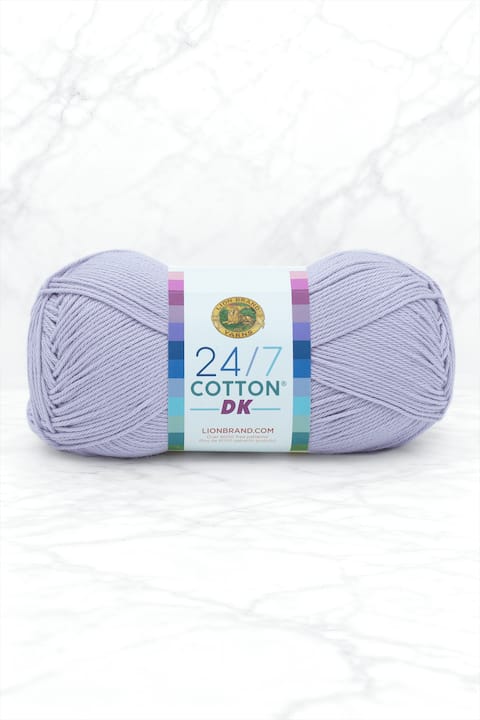
24/7 Cotton DK Yarn — best for lightweight produce bags
The DK-weight version of 24/7 Cotton works on a 3.5–4.0 mm hook and produces a finer, lighter mesh. A small produce bag needs approximately 250 yards at this weight. The lighter fabric is ideal for reusable produce bags that need to breathe. The Crochet Kit: Costa Market Bag bundles yarn and a pattern together, which removes the guesswork on yardage.
Coboo Yarn — best for a structured tote with a soft hand
Coboo is a cotton/bamboo blend with a silky, drapey feel. The bamboo content adds a subtle sheen and softens the hand compared to pure cotton. It works well for a structured tote where aesthetics matter as much as function. Use a 4.0–4.5 mm hook and work the base in single crochet for the first two inches to build density before opening up the stitch pattern.
Vanna’s Choice Yarn — best for a lined tote
Vanna’s Choice is a worsted-weight acrylic with excellent stitch definition and a wide color range. On its own it stretches more than cotton under load, but with a sewn fabric lining it becomes a practical, colorful tote. The premium acrylic keeps the surface looking clean through repeated use. Use a 4.5 mm hook and add a linen or canvas lining before finishing the top edge. The Crocheted Tote pattern is a natural pairing.
Wool-Ease Yarn — best for a cold-weather market tote
Wool-Ease is an 80% acrylic/20% wool blend, worsted weight. The wool content adds natural resilience and a slightly firmer hand than pure acrylic. It is not the first choice for a produce bag, but for a structured market tote used in cooler months it holds its shape well, especially when worked at a tight gauge. Machine-washable. Add a lining for heavy loads.
Buying tip: Always round up by one skein. Cotton and cotton-blend yarns vary slightly in yardage between colorways, and running short mid-handle is the most frustrating mistake in bag construction.
Three simple home tests to predict bag performance
These three tests take under 30 minutes on a small swatch and reveal how a yarn will behave in a finished bag before committing to a full project.
Pro Tip: Work a 4-inch square swatch at your intended gauge before testing. A swatch reflects real bag fabric far better than testing the raw yarn strand.
Stretch test
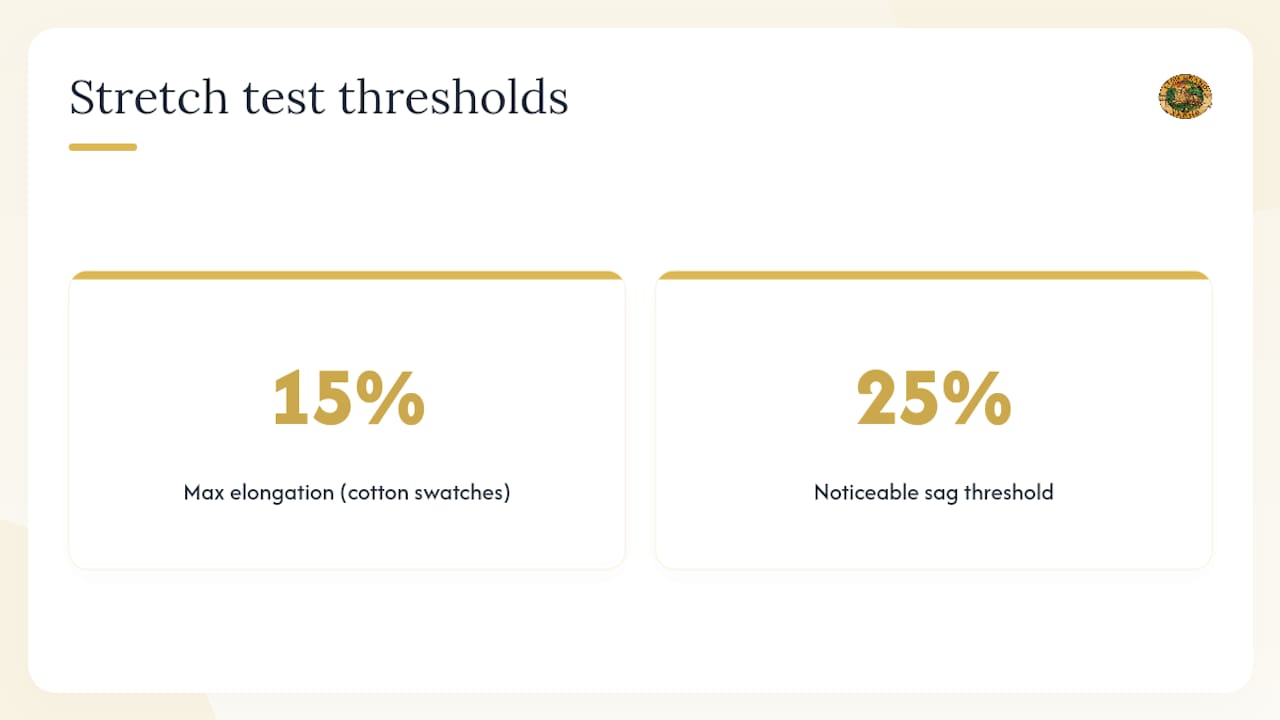
Cut a 12-inch length of crocheted swatch. Mark two points exactly 10 inches apart with a fabric pen. Hang the swatch vertically and clip a 500 g weight to the bottom. Measure the distance between the marks after 5 minutes. Calculate elongation: (loaded length minus 10 inches) divided by 10, expressed as a percentage. Cotton-based swatches should elongate less than 15% under this load. Anything over 25% signals the yarn will sag noticeably in a finished bag.
Wash and colorfastness test
Submerge the swatch in warm water with a small amount of mild detergent for 10 minutes. Rinse and press against a white cloth. Color transfer onto the cloth means the yarn bleeds. Lay the swatch flat to dry and compare dimensions to the pre-wash measurement. Shrinkage over 5% means the finished bag will need blocking after every wash.
Load test
Finish a small pouch (approximately 6 by 6 inches) in the stitch pattern you plan to use for the bag body. Fill it with 1 kg of dry goods (rice or dried beans work well). Hang it by the handles for 30 minutes. Check handle join points for distortion and measure the pouch height before and after. A well-chosen cotton yarn will show minimal change.
The table above is a template. Fill in your own measurements. An elongation below 15% is suitable for a mesh market bag. Between 15–25% is acceptable for a lined tote. Above 25%, add a lining or choose a different yarn.
Construction techniques that keep bags from failing
Structure comes from stitch density at the base and reinforced handles, not yarn choice alone. The best cotton yarn in the world will produce a saggy bag if the base is worked too loosely.
Build a dense base first. Work the first 1.5–2 inches of the bag in single crochet through both loops. This creates a firm platform that distributes weight evenly before the mesh body begins. Skipping this step is the most common reason bags sag at the bottom.
Recommended stitches by location:
Base and bottom rounds: Single crochet, worked tightly (go down a hook size if needed)
Body: Net stitch or open mesh with reinforcing single crochet rows every 4–6 rounds to prevent the mesh from stretching out of shape
Handles: Waistcoat stitch (also called the knit stitch in crochet) or dense single crochet worked in the round for a firm, rounded handle that resists twisting
Top edging: Two rounds of single crochet through both loops to stabilize the opening
Reinforce the handles. Work handles as separate strips of dense single crochet, then attach them using a box stitch or ladder reinforcement rather than a single seam. A box stitch distributes pull across a rectangle of stitches instead of concentrating stress at one point. For extra security, sew a small square of canvas or interfacing behind the attachment point on the inside of the bag.
Pro Tip: When attaching handles, work the attachment seam across the top of the handle, down one side, across the bottom, and back up the other side, then repeat the path a second time. This box reinforcement moves stress away from any single stitch and is the single most effective way to prevent handle failure.
For a more structured, dressier tote, the Encantada Crochet Bag pattern demonstrates how a denser stitch pattern and a firmer yarn combine to produce a bag that holds its shape without a lining.
Caring for a finished crochet market bag
Cotton and mercerized cotton bags are generally machine-washable, but a few specifics keep them looking good for years.
Washing: Use cold or warm water (not hot) on a gentle cycle. Hot water can cause cotton to shrink and may loosen the twist in the yarn over time. A mild, dye-safe detergent protects colorfastness. Turn the bag inside out before washing to reduce surface abrasion.
Drying: Lay flat to dry after washing and reshape while damp. Tumble drying on low heat is usually safe for mercerized cotton, but repeated high-heat cycles will shorten the yarn’s life. Air drying takes longer but preserves the bag’s dimensions better.
Storage: Store bags flat or loosely folded, not bunched or stuffed. Stuffing a bag into a tight space while damp is the fastest way to create permanent creases and mildew.
Repairs: Loose handles are the most common repair. Re-stitch the box reinforcement with a tapestry needle and a length of the original yarn. For pilling on cotton blends, a fabric shaver removes surface fuzz without damaging the underlying structure. If a bag has stretched out of shape, wet it thoroughly, reshape it by hand, and lay it flat to dry.
Why Lion Brand’s picks stand up to the criteria
Lion Brand’s selection process for bag-suitable yarns centers on three non-negotiable qualities: confirmed machine-washability, availability in worsted and DK weights with sufficient yardage per skein for a complete bag, and fiber compositions that keep elongation low enough for functional use.
24/7 Cotton Yarn and 24/7 Cotton DK Yarn are the clearest matches: both are 100% mercerized cotton, both are machine-washable, and both are available in enough colorways to satisfy any aesthetic. Coboo Yarn earns its place for crocheters who want a softer, drapier tote without sacrificing the cotton-content backbone that keeps elongation reasonable.
Shop Lion Brand yarns and kits for your next bag project
24/7 Cotton Yarn is the fastest path from skein to finished market bag. It is mercerized, machine-washable, and available in a color range wide enough to match any project aesthetic.
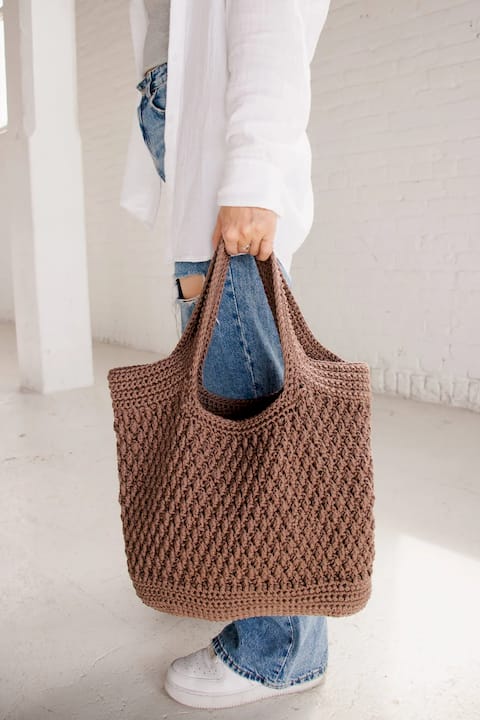
For crocheters who want a complete, ready-to-start project, the Crochet Kit: À Bien-Tôte bundles yarn and a pattern in one purchase. The Crochet Kit: Tote On The Go is another strong option for crocheters building out a set of functional home and market pieces. Both kits are available at Lion Brand, where the full pattern library, yarn catalog, and educational guides live in one place. Browse the bag patterns, match a yarn to the project, and add one extra skein to the cart before checkout.
Sources
FAQ
What is the best yarn to crochet a market bag?
Mercerized worsted-weight 100% cotton is the best choice for most market bags. It stretches less under load than acrylic, is machine-washable, and produces crisp stitch definition in mesh patterns. Lion Brand’s 24/7 Cotton Yarn is a widely available option that meets all three criteria.
How much yarn does a crochet market bag need?
A small market bag needs roughly 250 yards, a medium needs about 310 yards, and a large needs around 400 yards of worsted-weight cotton. Always buy one extra skein from the same dye lot to cover handle reinforcement and any adjustments.
Can acrylic yarn be used for crochet market bags?
Acrylic can work for lined or decorative totes, but it is not recommended for unlined weight-bearing bags. Under a 1,600 g load, acrylic swatches elongated significantly more in home testing than cotton-based yarns. If acrylic is preferred, use a smaller hook, work double-strand, and add a sewn fabric lining.
Which crochet stitches hold a bag’s shape best?
Single crochet at the base and handles provides the most density and strength. A net or mesh stitch works well for the bag body when paired with reinforcing single crochet rows every 4–6 rounds. The waistcoat stitch produces firm, rounded handles that resist twisting under load.
Do crochet market bags sell well?
Functional cotton market bags and reusable produce bags are consistently popular in craft marketplaces. Community pattern pages and marketplace listings show steady demand for both practical mesh bags and decorative chunky totes, with cotton remaining the standard fiber for produce-style bags.

