Free Knit Patterns: Download PDFs for Every Skill Level
The fastest way to get free, downloadable knit patterns is to use curated pattern libraries that offer PDF downloads alongside clear skill labels, gauge specs, and material lists. The Lion Brand free pattern library holds thousands of knitting patterns sorted by project type and skill level, all available as downloadable PDFs. The Craft Yarn Council publishes standardized abbreviation guides that make any downloaded pattern readable. Interweave offers detailed pattern-reading walkthroughs that pair well with any PDF you download.
Before saving a pattern, check these four things on the pattern page:
Skill level label (beginner, intermediate, advanced) so you know what techniques are required
Materials list with yarn weight, yardage per size, and needle size
Gauge information so your finished measurements will match the schematic
Downloadable PDF link — confirm it exists before you commit to the project
Key Takeaways
Free, downloadable knit patterns are most useful when the pattern page includes a skill label, gauge info, schematic, and a PDF download link — and when the knitter swatches and reads the full notes before casting on.
| Point | Details |
|---|---|
| Start with a curated library | Lion Brand’s free pattern library sorts thousands of designs by skill level, project type, and yarn weight. |
| Check the pattern page before downloading | Confirm materials list, gauge, schematic, abbreviations, and PDF link are all present. |
| Swatch and read notes first | Reading the setup section and swatching for gauge prevents the most common fit and shaping errors. |
| Match skill level honestly | A true beginner pattern uses knit/purl stitches, flat or simple construction, and includes photos or diagrams. |
| Use a kit for a complete start | Lion Brand knit kits pair yarn and pattern so yardage, gauge, and materials are already matched. |
Table of Contents
What does a pattern page contain, and how do you prepare to cast on?
Where can you find tutorials and learning resources alongside patterns?
What knit patterns look like organized by project type
Pattern libraries sort their collections by project category, and knowing which category to click first saves real time. Most libraries use a structure like this:
Hats — the fastest category for beginners; a Ribbed Knit Hat typically takes one skein of worsted weight and a weekend.
Scarves and cowls — flat or in-the-round, low shaping, great for practicing new stitch patterns without committing to a garment.
Sweaters and cardigans — the largest category; filter by construction method (top-down, seamless, or flat-and-seamed) to narrow results quickly. A Flagford Turtleneck pattern is a good reference for how size instructions and schematics are laid out.
Shawls — triangular or crescent shapes that let you practice increases and yarn-overs; a Eyelet Triangle Shawl pattern is a popular entry point.
Blankets — stitch-repeat heavy and great for building rhythm; bulky yarn cuts the time significantly.
Baby items — small scale, fast finish, and perennially giftable.
Home and accessories — dishcloths, market bags, and pillow covers; low-stakes projects for testing a new stitch pattern before scaling up.
Within each category, look for a secondary filter for yarn weight. That single filter cuts a list of hundreds down to the patterns that actually work with what’s already in your stash.
How do you search and filter a pattern library effectively?
Start with the filters that eliminate the most irrelevant results first, then refine.
Skill level first. Filtering by beginner, intermediate, or advanced before anything else removes patterns that require techniques you haven’t learned yet.
Project type second. Combine skill level with a category (hat, sweater, shawl) to get a manageable list.
Yarn weight third. If you already have yarn, filter by its weight — worsted, bulky, DK — to find patterns that match your stash.
Gauge last. Gauge filtering is most useful when you’re substituting yarn and need to confirm the stitch-per-inch requirement matches your swatch.
For search phrases, specificity helps. “Easy beginner hat worsted” returns tighter results than “hat pattern.” Add the construction method when you know it: “top-down raglan sweater” or “flat scarf garter stitch.”
Free pattern archives commonly sort by project type, skill level, and provide downloadable PDFs, so knitters can expect easy filters for skill level, yarn weight, and gauge on well-organized library pages.
Pro Tip: Before downloading, scroll to the pattern’s photo gallery and read two or three user comments or project notes. Photos from other knitters show how the finished piece actually drapes and fits — which is information the designer’s studio photo sometimes hides.
What does a pattern page contain, and how do you prepare to cast on?
Read the notes and setup section first, and swatch before you cast on. That single habit prevents the most common pattern-following mistakes.
According to Interweave, patterns typically include a materials list, finished dimensions, gauge, abbreviations, and repeat notation. Patterns that add both written and charted instructions plus photos are easier for learners to follow. Here’s what to confirm on every pattern page before saving the PDF:
| Pattern Page Element | What to Check |
|---|---|
| Materials list | Yarn name, weight, fiber, and total yardage per size |
| Needle size | US size and metric equivalent; circular or straight |
| Gauge | Stitches and rows per 4 inches in the specified stitch pattern |
| Finished measurements | Chest, length, and sleeve for garments; width and length for accessories |
| Schematic | Labeled diagram showing all dimensions |
| Abbreviations glossary | Definitions for every shorthand used in the pattern |
| Downloadable PDF | Confirmed link to save or print |
The Craft Yarn Council standardizes abbreviations like K (knit), P (purl), CO (cast on), BO (bind off), YO (yarn over), K2tog (knit two together), and SSK (slip, slip, knit). Asterisks and brackets mark repeated sections. Learning these before you open a new PDF removes the friction of stopping mid-row to look up a symbol.
Experienced knitters scan the setup page to spot unfamiliar techniques, check gauge, and highlight the row instructions for their chosen size. Stitch counts at the end of shaping rows are the most reliable built-in error-checking tool — if your count doesn’t match, catching it after one row is far easier than after six inches.
Beginner guides consistently recommend reading the materials and gauge sections, making a swatch, and using the finished measurements and schematic to confirm fit before starting.
Pro Tip: Print the PDF and use a highlighter on every number that applies to your size. Switching between size columns mid-pattern is one of the most common sources of shaping errors.
How do you pick a pattern that matches your skill level?
Ask these questions before committing to a download:
Do I know every technique listed in the materials or notes section? If two or more are unfamiliar, the pattern will stall.
Is the gauge critical? For accessories like scarves or dishcloths, gauge is flexible. For fitted garments, a half-stitch difference per inch changes the finished chest measurement by several inches across a full sweater.
How long will this take? A hat in worsted weight takes most knitters a weekend. A sweater in fingering weight can take months. Match the project length to your current motivation level.
What does “beginner” actually mean here? A true beginner-friendly pattern uses simple stitch patterns like knit and purl, straightforward construction with flat pieces or minimal shaping, clear step-by-step instructions, and photos or diagrams. If the pattern’s beginner label is attached to a project with four stitch pattern variations and short-row shaping, look for a different one.
For yarn substitution, the rule is simple: match the gauge, not the fiber. Swap a worsted-weight acrylic for a worsted-weight wool and swatch to confirm the numbers align. Changing yarn weight requires recalculating stitch counts, which is an intermediate skill. Short projects like dishcloths, cowls, and hats in worsted weight are the recommended starting point because they balance visible stitches, manageable time, and transferable skills.
What knitting patterns are most popular right now?
A few project types consistently top download lists and hold their popularity across seasons:
Cozy shawls stay in demand because they’re wearable, giftable, and skill-flexible. A simple triangle shawl teaches increases; a crescent shawl adds short rows. Both finish faster than a sweater.
Top-down sweaters have surged in popularity because knitters can try on the piece as they go, which removes the guesswork from fit. Raglan construction is the most beginner-accessible version. The Quick and Cozy Pullover is a good example of how texture and construction can combine at an intermediate level.
Textured blankets — seed stitch, moss stitch, or simple cable panels — are perennial downloads because they work up in bulky or super bulky yarn and make high-impact gifts with relatively low technique requirements.
Simple cowls are the fastest gratification project in knitting. Cast on, knit in the round, bind off. One skein, one weekend, zero shaping.
Cable pullovers attract intermediate knitters who want a visible skill upgrade. The Oversized Aran Pullover shows how cable panels integrate into garment construction.
Where can you find tutorials and learning resources alongside patterns?
Downloading a pattern is step one. Having the right learning resources nearby is what gets the project finished.
Step-photo tutorials — look for resources that show each stitch formation from the knitter’s perspective, not just the finished result.
Short how-to videos — useful for techniques like picking up stitches, working short rows, or joining in the round, where written instructions alone can be hard to visualize.
Stitch libraries — a reference that shows how each stitch pattern looks knitted up, not just the written repeat. Mastering four basic ways of forming a loop makes advanced techniques approachable because many complex moves are variations on foundational actions.
Pattern-specific photo sequences — the best pattern pages include progress photos showing construction stages, not just the finished object.
The workflow that works: read the pattern fully, identify any unfamiliar technique, find a tutorial for that specific technique, practice it on a small swatch in the pattern’s stitch, then start the project. Design references like The Knitting Book (DK) and Knit Step by Step are useful companion references when a downloaded pattern uses an unfamiliar method.
Lion Brand publishes foundational guides covering casting on, binding off, reading a knitting pattern, yarn weight charts, and needle size guides — all free and paired with the pattern library so you can move from tutorial to download in one place.
Why curated pattern libraries produce better results
Generic pattern aggregators collect everything. Curated brand libraries select patterns that have been tested against real yarn, real gauge, and real needle sizes — which means the instructions are more likely to work the first time.
The trust signals worth checking on any pattern page: a clear skill-level label, a schematic with labeled dimensions, gauge information tied to a specific stitch pattern, and a named designer or author credit. Pattern collections that provide both step photos and schematic diagrams are the most beginner-friendly and reduce pattern-following errors. When a pattern page has all of these, the PDF is worth downloading. When two or three are missing, the pattern may work, but the knitter carries more of the error-checking burden.
Lion Brand kits that come with everything you need
Free downloadable patterns are the starting point. When you want yarn and pattern materials bundled together, Lion Brand’s ready-to-make knit kits remove the guesswork from shopping.
The Knit Kit – Rising Kite Shawl is the right pick for knitters who want a wearable accessory with a modern geometric shape. Everything needed — yarn and pattern — arrives together, so there’s no separate yardage calculation.
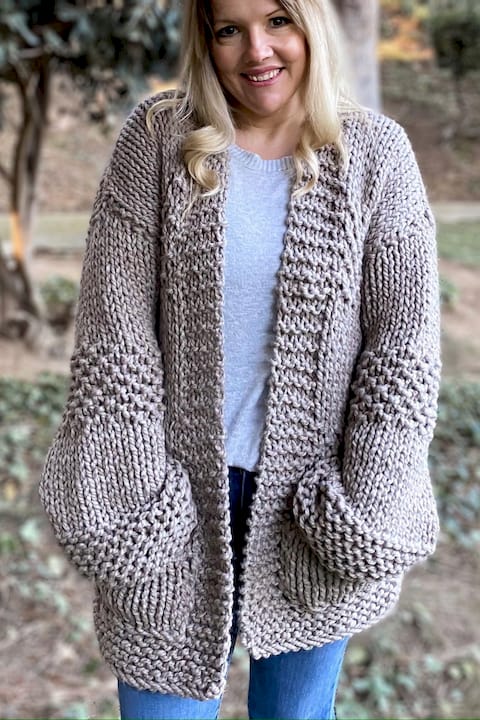
The Knit Kit – Truro Cardigan suits knitters ready to move from accessories into a full garment. The cardigan format means no seaming at the front opening, which simplifies finishing considerably.
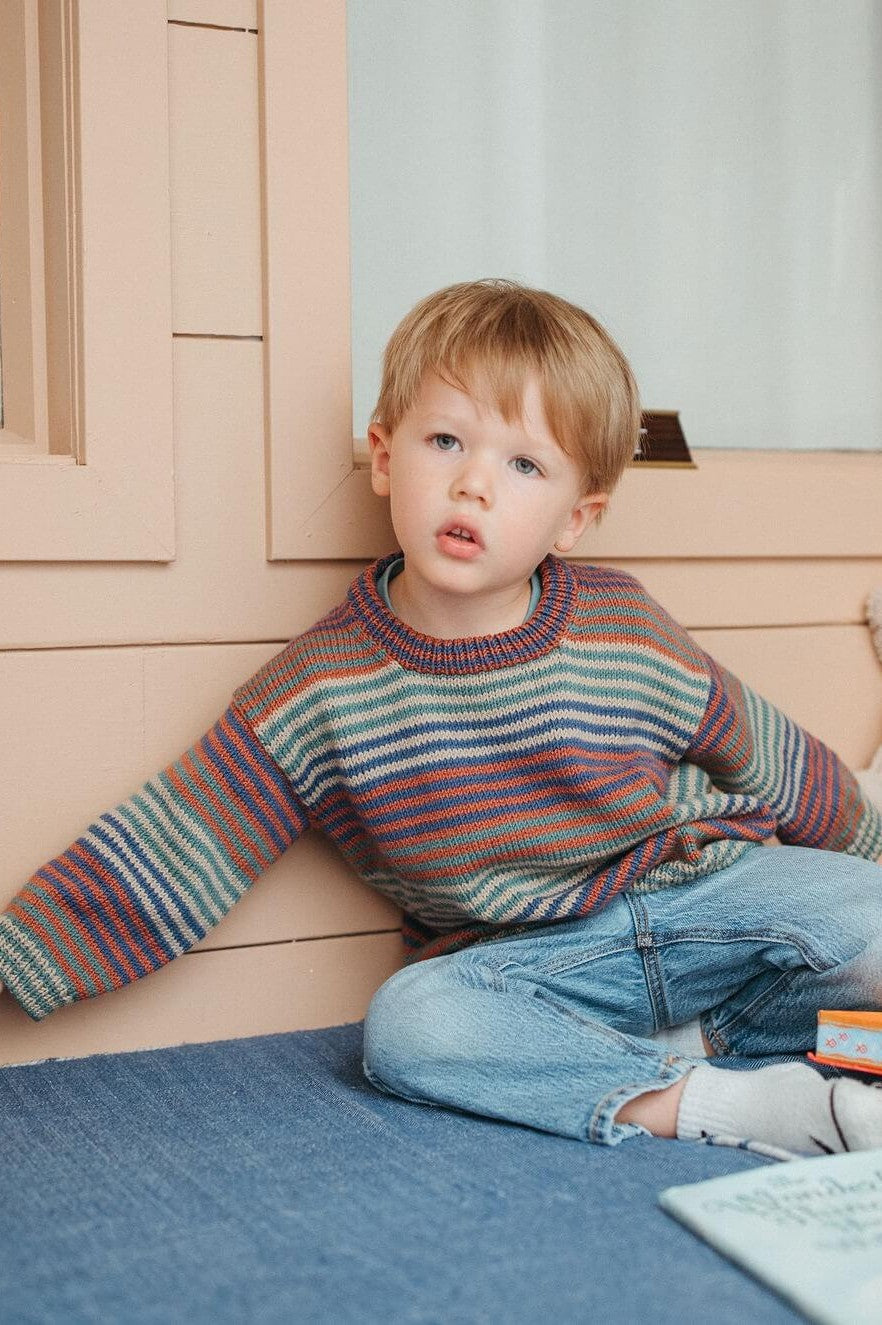
The Knit Kit – Back to School Sweater is built for knitters who want a classic pullover with clean construction and enough yardage for a full-sized child’s garment. It’s a practical choice for a fall wardrobe project or a thoughtful gift.
Browse the full knit and crochet kit collection to find the kit that matches your next project.
Sources
These references are worth bookmarking alongside any pattern PDF:
How to Read a Knitting Pattern | Welcome to the Craft Yarn Council
How to Read a Knitting Pattern for Beginners: Step-by-Step Guide – Sheep and Stitch
What to Look For in a Beginner Knitting Pattern – The Cornish Knitter
Always check that a pattern page credits a named designer and includes a downloadable PDF before committing time and yarn to the project.
FAQ
What is the best site for free knitting patterns?
Lion Brand’s free pattern library is one of the largest curated collections available, with thousands of downloadable PDFs sorted by skill level, project type, and yarn weight. The Craft Yarn Council also maintains standardized pattern resources useful for reading any pattern correctly.
What are the most popular knitting patterns right now?
Cozy shawls, top-down raglan sweaters, textured blankets, and simple cowls consistently rank among the most downloaded project types. Cable pullovers are popular with intermediate knitters looking to build visible technique skills.
Where is the best place to get knitting patterns?
Curated brand libraries that offer downloadable PDFs with skill labels, schematics, and gauge information give knitters the most reliable starting point. Lion Brand’s pattern library and the Craft Yarn Council’s resources are two of the most trusted free options.
How do you read a knitting pattern if you’re a beginner?
Start by reading the full notes and setup section before casting on, then check gauge by swatching. Learn the standard abbreviations (K, P, CO, BO, YO, K2tog) from the Craft Yarn Council’s guide, and use the pattern’s schematic to confirm finished measurements match your intended size.
