
What Is Tape Yarn? A Complete Guide for Crafters
Tape yarn (also called ribbon yarn) is defined as a flat, ribbon-like yarn constructed by weaving or knitting fibers into a ribbon or tube-like form rather than spinning them into a round strand. This flat, non-round construction sets it apart from every traditional yarn type and produces a fabric-like texture that drapes beautifully in finished projects. Common fiber compositions include cotton, viscose, polyamide, and recycled materials, each contributing different levels of sheen, softness, and durability. Tape yarn has become a go-to choice for crafters who want lightweight, breathable textiles with a modern, graphic stitch appearance. Lion Brand offers flat and ribbon-style yarns well suited to this construction style, making it easy to get started with this format at any skill level.
What is tape yarn, and how is it different from regular yarn?
Tape yarn’s flat structure produces a fundamentally different fabric than round, spun yarn. Round yarns twist fibers together into a cylinder, which creates loft and elasticity. Ribbon or tape yarns, by contrast, lay flat in the stitch, producing a smooth, almost woven surface with visible graphic texture.
Construction and fiber content
The flat form is achieved through one of two methods: weaving fibers into a narrow ribbon or knitting them into a collapsed tube. Both methods result in a yarn that has width rather than diameter. Fiber content drives the final character of the fabric. Cotton tape yarn produces a breathable, matte finish ideal for summer garments. Viscose ribbon adds sheen and drape. Polyamide blends increase durability and structure, making them well suited for bags and baskets. Recycled material tape yarns are increasingly available and offer a sustainable option without sacrificing texture.
How yardage and weight compare
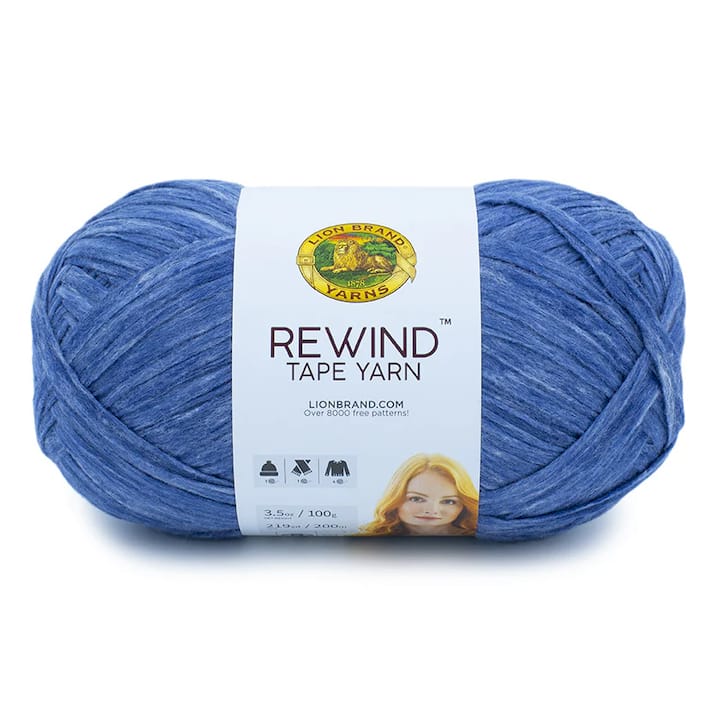
Tape yarn typically delivers lower yardage per 100g than a comparable round yarn. That lower yardage reflects the yarn’s width and density. The flat construction also means tape yarn stretches and compresses differently from round yarns, which has direct implications for gauge and project sizing. Crafters who switch from round to ribbon yarn without adjusting their approach often find their finished pieces run smaller or larger than expected.
Pro Tip: Always check the label weight category and compare it to a round yarn you know well. Tape yarn in a bulky weight category will behave very differently from a bulky wool or acrylic, even at the same gram weight.
What tools and stitches work best for tape yarn?
Tape yarn requires larger needles or hooks in the 5mm–10mm range to avoid compressing its flat structure. Smaller tools force the ribbon to fold and bunch inside the stitch, which destroys the clean, graphic look that makes tape yarn appealing. The right tool size lets each stitch open up and display the yarn’s full width.
Best stitch patterns for tape yarn
Simple stitch patterns consistently outperform complex ones with ribbon yarn. Garter stitch, stockinette, mesh, and openwork all highlight tape yarn’s flatness and sheen. Intricate cable or textured stitch patterns tend to get lost because the flat ribbon fills the stitch space differently than a round strand. The visual impact of tape yarn comes from the yarn itself, not the stitch complexity.
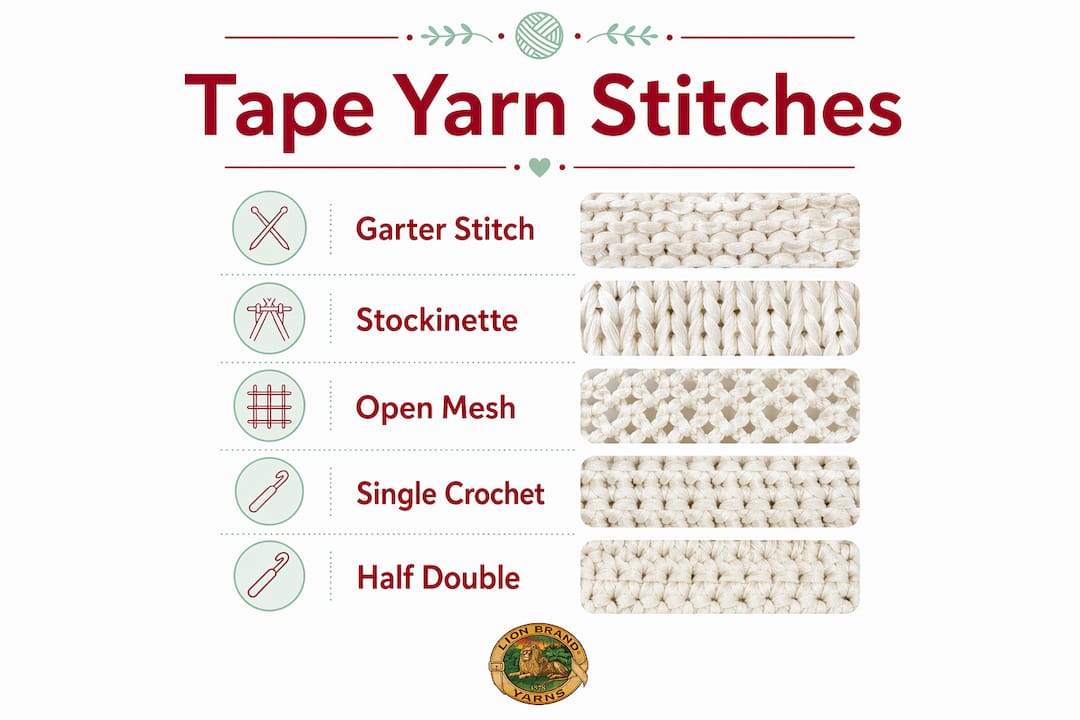
For tape yarn crochet, single crochet and half double crochet in an open grid or mesh layout produce striking results. For tape yarn knitting, a simple garter or stockinette swatch will immediately show you why crafters love this material. The stitches look clean, almost architectural.
Tension and gauge
Consistent, somewhat loose tension is the single most important technique adjustment when working with ribbon yarn. Tight tension compresses the ribbon and flattens the stitch definition. Loose tension lets the flat structure breathe and creates the drape that makes tape yarn garments feel lightweight and modern.
Gauge swatching is critical with tape yarn because it behaves differently from round yarns and may stretch or compress in unexpected ways. A swatch helps predict how the finished fabric will behave and whether a needle or hook size adjustment is needed before committing to a full project. Skipping the swatch with ribbon yarn is a reliable way to end up with a bag that is twice the intended size or a top that fits no one.
Pro Tip: Work from the center of the ball to keep tape yarn feeding smoothly and reduce twisting. Twisting causes uneven stitches and fights the flat structure throughout the project.
What can you make with tape yarn?
Tape yarn is widely used for lightweight summer garments and sturdy home decor because its breathability and durability cover both categories well. That range is one of its strongest selling points. A single fiber type can produce a breezy summer top and a structured market bag.
Fashion and wearables
Lightweight summer tops and tanks. The breathable, open structure of ribbon yarn makes it ideal for warm-weather garments. A simple stockinette top in cotton tape yarn feels cool against the skin and drapes elegantly.
Cardigans and boleros. A breezy cardigan worked in tape yarn creates a lightweight layering piece with a polished, almost woven appearance.
Shawls and scarves. The flat ribbon catches light differently at every angle. An easy lace shawl in tape yarn becomes a statement accessory with minimal stitch complexity.
Accessories and bags
Tape yarn’s structure makes it one of the best choices for bags. The flat ribbon locks together under tension, creating a firm, durable fabric that holds its shape. A knitted clutch in tape yarn will outlast many softer yarn alternatives because the flat construction resists stretching under load. Headbands, belts, and statement jewelry pieces also benefit from tape yarn’s graphic, ribbon-like appearance.
Home decor
Baskets, placemats, coasters, and wall hangings are natural fits for tape yarn. The flat construction creates a tight, structured surface when worked at a firm gauge. The Carry All Trays crochet kit is a practical example of how tape-style yarn produces home decor with clean lines and real structural integrity.
| Project type | Why tape yarn works |
|---|---|
| Summer tops and tanks | Breathable, lightweight, drapes well against the body |
| Market bags and totes | Flat construction locks under tension for durability |
| Shawls and scarves | Ribbon catches light, creates visual interest with simple stitches |
| Baskets and placemats | Firm gauge produces structured, long-lasting home decor |
Pro Tip: Tape yarn’s flat shape fills space quickly, so projects reach completion faster than with round yarn of the same weight. This makes tape yarn an excellent choice when you want a satisfying, quick finish.
Advanced finishing techniques for tape yarn projects
Finishing tape yarn projects requires a different approach than finishing round yarn work. The flat ribbon does not behave like a spun strand when you try to weave in ends, and ignoring that difference leads to visible bulk on the fabric surface.
Weaving in ends
Weaving in ends with tape yarn requires splitting the individual strands of the ribbon and back-stitching each one separately to distribute bulk evenly. This specialized technique maintains the project’s smooth surface. Running the full ribbon width through the fabric in one pass creates a lump that shows through on the right side.
Preventing twisting and curling
Tape yarn has a tendency to twist during work, especially when pulled from the outside of a ball. Working from the center pull eliminates most of this problem. When twisting does occur mid-project, drop the needle or hook and let the work hang freely for a moment. The yarn will unwind on its own. Forcing twisted ribbon yarn through a stitch creates uneven tension that is difficult to correct later.
Split ribbon ends before weaving in to reduce bulk.
Back-stitch each strand separately for a smooth fabric surface.
Work from the center of the ball to prevent twisting.
Let work hang freely to release mid-project twists.
Block finished pieces flat to set the ribbon structure and even out tension.
Care and durability
Cotton and recycled cotton tape yarns are generally machine washable on a gentle cycle, but always check the label. Viscose tape yarns often require hand washing to preserve their sheen and prevent distortion. Flat ribbon construction means tape yarn garments can lose their shape if agitated heavily in a wash cycle. Laying pieces flat to dry preserves the structure far better than hanging, which can stretch the flat fabric under its own weight.
Lion Brand’s perspective on tape yarn’s creative potential
Tape yarn occupies a genuinely distinct place in the fiber arts world, and it rewards crafters who treat it on its own terms. The most common mistake is approaching it like a standard worsted or bulky yarn and expecting the same results. Tape yarn is not a substitute for round yarn. It is a different material with a different logic.
The flat construction creates a fabric that looks almost woven, which opens up a category of projects that traditional knitting and crochet cannot easily replicate. A tape yarn market bag has a structural quality that a round-yarn bag simply does not. A ribbon yarn summer top drapes with a fluidity that feels more like fabric than knitwear.
The accessibility angle is also real. Tape yarn’s thicker, flat nature makes stitches easier to see and count, which genuinely helps new learners build confidence. At the same time, experienced crafters find that the material pushes them to think differently about stitch selection and tension. That combination of accessibility and creative challenge is rare in a single yarn type.
The recommendation is to start with a simple project, a scarf or a small bag, and let the material teach you how it wants to move. Resist the urge to force complex stitch patterns onto it. The yarn’s own texture is the design.
Ready to start your first tape yarn project?
Lion Brand carries flat and ribbon-style yarns suited for the full range of tape yarn projects, from breezy summer tops or classic brimmed hats to structured home decor.

For crafters who want a guided start, Lion Brand’s collection of knit and crochet kits includes patterns and yarn bundled together, so there is no guesswork about fiber compatibility. Browse by project type or skill level and find the kit that matches where you are in your craft right now.
FAQ
What is tape yarn made of?
Tape yarn is made from fibers including cotton, viscose, polyamide, and recycled materials, woven or knitted into a flat ribbon or tube form rather than spun into a round strand.
What hook or needle size works for tape yarn?
Tape yarn works best with hooks or needles in the 5mm–10mm range to keep the flat structure open and prevent compression inside the stitch.
Is tape yarn good for beginners?
Tape yarn is approachable for beginners because its flat, wide structure makes stitches easier to see and count. Simple stitch patterns like garter and single crochet are the best starting points.
How do you weave in ends with tape yarn?
Split the ribbon strands and back-stitch each one separately into the fabric to distribute bulk evenly and keep the surface smooth.
What projects are best suited to tape yarn?
Tape yarn excels in lightweight summer garments, market bags, scarves, shawls, baskets, and placemats. Its flat construction creates breathable, structured fabric that holds its shape well in both fashion and home decor applications.
Key takeaways
Tape yarn is a flat, ribbon-like fiber that produces breathable, structured fabric best worked with larger tools, simple stitch patterns, and consistent loose tension.
| Point | Details |
|---|---|
| Flat construction defines tape yarn | Tape yarn is woven or knitted into a ribbon form, not spun, which creates its distinctive flat, graphic stitch appearance. |
| Use larger tools and loose tension | Hooks and needles in the 5mm–10mm range prevent compression and let the flat ribbon display its full width. |
| Swatch before every project | Tape yarn stretches and compresses differently from round yarns, making a gauge swatch necessary for accurate sizing. |
| Finish ends by splitting strands | Back-stitching split ribbon strands separately distributes bulk and keeps the fabric surface smooth. |
| Best projects leverage flatness | Bags, summer tops, shawls, and baskets all benefit directly from tape yarn’s breathable, structured flat construction. |