
Knitting Needle Material Differences: Your 2026 Guide
Knitting needle material differences directly affect stitch tension, yarn speed, and hand comfort on every project you knit. The three core material categories are metal, wood and bamboo, and plastic, each producing a distinct knitting experience. Metal needles move yarn fast and last for years. Wood and bamboo grip yarn gently and feel warm in your hands. Plastic sits in the middle, light and affordable but less precise. Knowing how these materials interact with your yarn and your knitting style is the fastest way to fix tension problems, reduce hand fatigue, and get gauge right the first time.
What are the main properties of metal knitting needles?
Metal needles are the fastest and most durable option available, with low surface friction that lets stitches glide off the tip with almost no resistance. Aluminum, stainless steel, brass, and nickel-plated varieties each share this core quality. That speed makes metal the go-to choice for experienced knitters working on complex colorwork, lace, or any pattern requiring rapid stitch manipulation.
The surface of a metal needle is smooth and cool to the touch. That coolness can feel refreshing in warm weather but uncomfortable during long sessions, especially for knitters with joint sensitivity. Metal needles also produce a faint clicking sound as they work, which some knitters love and others find distracting.
Key properties of metal knitting needles:
Speed: Stitches slide off quickly, ideal for fast knitting and tight deadlines
Durability: Metal needles resist bending, breaking, and warping over years of use
Weight: Heavier than wood or plastic, which can cause hand fatigue in extended sessions
Grip: Low friction means slippery yarns like silk or bamboo move freely, but beginners may drop stitches more often
Sound: Produces an audible click that varies by metal type
Pro Tip: If you knit with Boye aluminum straight needles and find your stitches slipping off too easily, try holding the yarn with slightly more tension rather than switching needles entirely.
Metal needles work best with textured or sticky yarns like wool, where the low friction balances the yarn’s natural grip. Pairing metal needles with a slippery yarn like a silk blend can make stitch control genuinely difficult for newer knitters.
How do wood and bamboo needles differ in performance?
Wood and bamboo needles provide more friction and warmth than metal, giving knitters more control over each stitch. That extra grip slows yarn movement slightly, which is exactly what beginners need when learning to manage tension. Bamboo is the most widely available wood-type needle, but birch, rosewood, and ebony each offer different weight and durability profiles.

Birch and laminated birch are the most common wood needle materials. Rosewood and ebony are denser, heavier, and more expensive, with a warmer feel and longer lifespan. Bamboo sits at the lighter end of the spectrum, making it a favorite for knitters who want grip without added weight.
Benefits and limitations of wood and bamboo needles:
Grip: Medium to high friction keeps stitches in place, reducing accidental drops
Warmth: Wood and bamboo feel warm in the hand, easing discomfort during long sessions
Weight: Lighter than metal, reducing strain on wrists and fingers
Durability: Wood needles wear faster than metal and can splinter or break under pressure
Flexibility: Bamboo has slight flex, which some knitters find forgiving; hardwood varieties are stiffer
Pro Tip: Bamboo circular needles like Clover bamboo circulars are an excellent starting point for beginners working with slippery yarns like 24/7 Cotton, because the grip keeps stitches from sliding off mid-row.
Needle material interacts directly with yarn texture. Sticky yarns like textured wool or chenille pair naturally with wood and bamboo. Slippery yarns like silk or plant-fiber blends favor metal needles. Matching needle material to yarn texture is one of the most underused techniques for improving stitch consistency.
When and why should you choose plastic or acrylic needles?
Plastic and acrylic needles are lightweight and budget-friendly, making them a practical starting point for new knitters who are not ready to invest in premium materials. Their grip and friction level fall between metal and wood, offering a middle-ground experience that works for many yarn types.
Plastic needles become especially useful at larger sizes. A size US 15 or US 17 plastic needle weighs far less than its metal equivalent, reducing wrist strain when working with bulky or super bulky yarns like Wool-Ease Thick & Quick. That weight difference matters when you are knitting a chunky blanket for several hours.
When plastic needles make sense:
Budget projects: Plastic needles cost less than metal or wood sets, making them accessible for beginners
Large needle sizes: Lightweight plastic reduces fatigue when working with bulky yarns
Casual knitting: For low-stakes projects where precision tension is less critical
Learning gauge: Beginners can practice stitch formation without worrying about premium needle care
Plastic needles can cause slight yarn sticking or squeaking depending on quality, which affects stitch consistency. Higher-quality acrylic needles minimize this issue, but budget options may produce uneven stitch tension over time. Plastic also bends under pressure more than metal or hardwood, which can distort needle size accuracy at finer gauges.
How does needle material affect stitch tension and gauge?
Switching needle material can shift gauge by the equivalent of one needle size, even when the needle diameter stays the same. That is a significant difference. A knitter who swatches on metal needles and then switches to wood mid-project may find their fabric tightening noticeably.
The mechanism is friction. Metal needles let yarn glide freely, which loosens stitch tension slightly. Wood and bamboo create resistance, which tightens stitches. The result is a measurable difference in gauge that can throw off garment sizing if you do not account for it.
| Needle material | Friction level | Tension effect | Best yarn pairing |
|---|---|---|---|
| Metal (aluminum, steel) | Low | Loosens stitches | Textured wool, acrylic |
| Bamboo | Medium-high | Tightens stitches | Slippery cotton, silk blends |
| Wood (birch, rosewood) | Medium-high | Tightens stitches | Sticky or textured fibers |
| Plastic/acrylic | Medium | Neutral to slight tighten | Bulky, beginner-weight yarns |
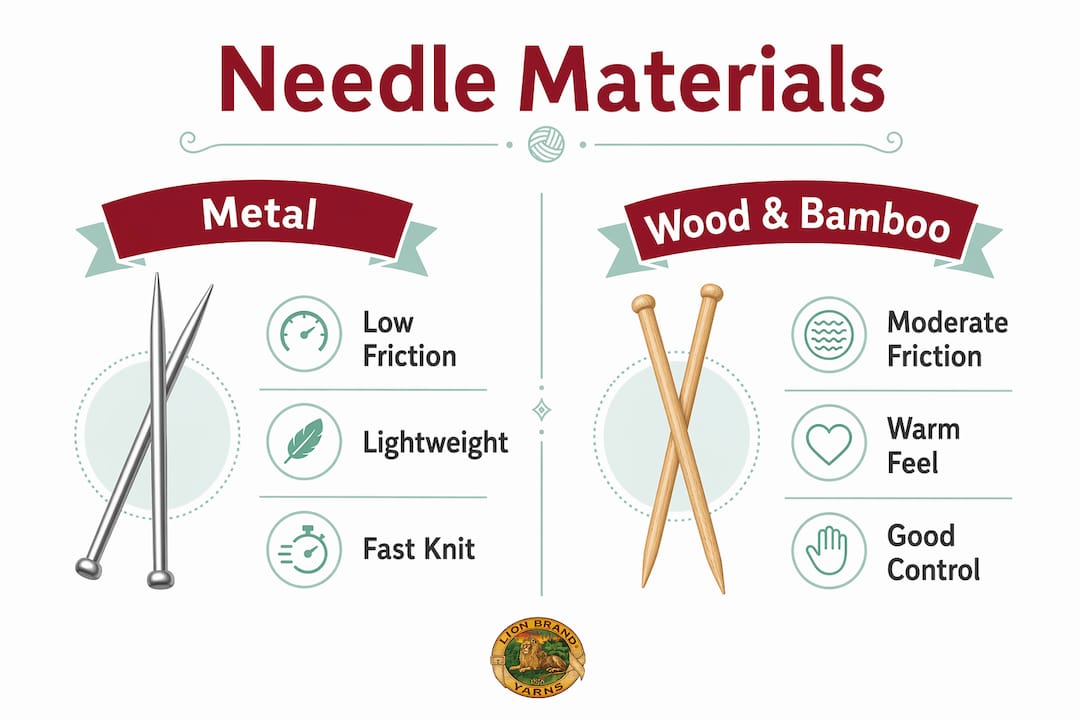
Needle surface friction alters yarn glide and stitch tension in ways that accumulate across hundreds of stitches. A single row may look identical regardless of needle material. An entire sweater front will not. Swatching with the exact needle material you plan to use for the project is the only reliable way to confirm gauge before committing to a full piece.
Pro Tip: Always swatch with the same needle material you will use for the finished project. If you switch from metal to bamboo after swatching, knit a second swatch on bamboo before continuing.
Experienced knitters switch needle materials mid-project to troubleshoot tension problems. Moving from metal to wood slows knitting and adds control. Switching back to metal loosens tension and increases speed. This is a practical technique worth keeping in your toolkit.
What ergonomic factors should you consider when choosing needle material?
Metal needles may cause hand discomfort for knitters with arthritis or joint pain, because their weight and cold temperature add stress to already sensitive hands. Wood and bamboo are lighter and warmer, which reduces strain during long knitting sessions. Material choice is not just about stitch quality. It directly affects how long you can knit comfortably.
Key ergonomic considerations by material:
Metal: Heavier, cold to the touch, can aggravate joint pain with extended use
Wood and bamboo: Lighter, warm, and gentler on hands, recommended for knitters managing hand fatigue
Plastic: Lightweight at large sizes, but grip quality varies and can require more hand tension to control
Carbon fiber: Carbon fiber needles combine the lightweight feel of wood with the smooth glide of metal, making them a strong ergonomic option for knitters who want speed without the weight
Needle shape also plays a role that most knitters overlook. Square or cubic needle profiles reduce the rotational grip needed to hold the needle, which lowers hand fatigue significantly. This benefit applies across all materials and is worth considering if you knit for long stretches.
The best needle material is not universal. It depends on fiber type, knitting tension style, and physical comfort needs. A knitter with tight tension working with slippery yarn on a garment project has completely different needs from a beginner making a garter stitch scarf with wool. Treating needle material as a fixed choice rather than a project-specific tool is the most common mistake knitters make.
Brittany Birchwood double-pointed needles are a good example of how wood needle design addresses ergonomic needs. Their light weight and warm texture make them comfortable for sock and small-circumference knitting, where hand position stays fixed for long periods.
Key Takeaways
The most effective approach to choosing knitting needle materials is matching friction level, weight, and yarn texture to your specific project and skill level.
| Point | Details |
|---|---|
| Metal needles offer speed | Low friction makes metal ideal for experienced knitters and fast-moving projects. |
| Wood and bamboo add control | Higher friction tightens stitches and helps beginners manage tension and slippery yarns. |
| Plastic suits large sizes | Lightweight plastic reduces wrist fatigue when working with bulky yarns at large needle sizes. |
| Material shifts gauge | Switching needle material can change gauge by one needle size; always swatch with your project needle. |
| Ergonomics matter | Wood and bamboo reduce hand strain; carbon fiber offers speed with lighter weight for knitters with joint concerns. |
Lion Brand’s take on needle material selection
The most common mistake knitters make is treating needle material as an afterthought. The needle is not just a tool for moving yarn. It is the primary variable controlling how your stitches form, how your fabric behaves, and how your hands feel after two hours of knitting.
At Lion Brand, the recommendation for beginners is always bamboo or wood first. The grip keeps stitches from sliding off unexpectedly, which builds confidence faster than any other single change. A beginner who drops fewer stitches learns tension control more quickly and stays motivated longer.
For experienced knitters, the advice shifts. Metal needles reward speed and precision. If you are working a complex lace pattern or a colorwork yoke sweater, the low friction of aluminum or stainless steel lets you move through rows efficiently. The Basic Scarf Pattern is a great project for testing how metal versus bamboo needles change your knitting pace on a simple stitch pattern.
The real skill is knowing when to switch. If your fabric is coming out too loose, move to bamboo. If your hands are aching, try a lighter wood or carbon fiber option. Needle material is a variable you control, not a fixed constraint.
— Lion Brand Yarn
Ready to knit with the right needles and yarn?
Lion Brand carries a full range of knitting needles in metal, wood, bamboo, and plastic, alongside yarn collections designed to work with each material type. Whether you are a beginner building your first kit or an experienced knitter fine-tuning your gauge, the right combination of needle and yarn makes every project more satisfying.

The Knit Kit: The Gift Bag includes everything needed to start a project with the right tools already selected. For knitters who want to practice with different needle materials on a quick project, the Knit Kit: Nestled Knots Blanket pairs bulky yarn with appropriately sized needles for a satisfying, fast finish. Browse Lion Brand’s full collection of knitting kits and patterns to find the right starting point for your next project.
FAQ
What is the best knitting needle material for beginners?
Bamboo and wood are the best needle materials for beginners. Their higher friction keeps stitches from sliding off accidentally, giving new knitters more control over tension and stitch placement.
Do metal needles really change your gauge?
Yes. Metal needles loosen stitch tension compared to wood or bamboo, and the difference can equal approximately one needle size. Always swatch with the needle material you plan to use for the full project.
Are plastic knitting needles worth using?
Plastic needles are worth using for large needle sizes and bulky yarn projects. Their light weight reduces wrist fatigue, and their lower cost makes them practical for beginners or casual knitters.
Which needle material is best for slippery yarn?
Wood and bamboo are best for slippery yarns like cotton or silk blends. Their surface friction slows yarn movement and prevents stitches from sliding off the needle tip unintentionally.
Can needle material help with hand pain or arthritis?
Yes. Wood, bamboo, and carbon fiber needles are lighter and warmer than metal, reducing strain on joints during long knitting sessions. Square or cubic needle profiles also lower the grip force needed, which further eases hand fatigue.