Felting Wool Yarn Explained: Techniques and Best Results
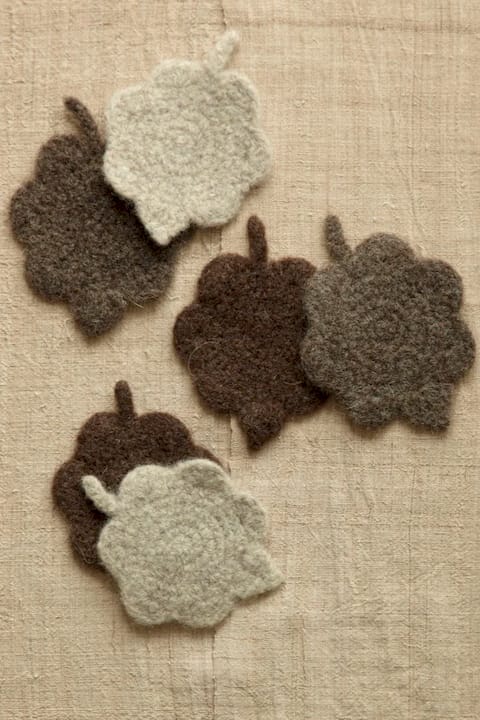
Image: Felted Leaf Coasters
- Wool felting transforms loose fibers into durable fabric using moisture, heat, and agitation. The fiber’s microscopic scales, construction, and treatment greatly influence felting success. Combining wet and needle felting techniques allows for versatile, textured creations.
Felting wool yarn is defined as the process of interlocking wool fibers into a dense, durable fabric or three-dimensional form through moisture, heat, friction, or mechanical needle action. This technique, formally known as wool felting, transforms loose fibers into a solid textile that holds its shape without weaving or knitting stitches. Two core methods drive the craft: wet felting and needle felting. Understanding how wool yarn properties affect felting outcomes is the difference between a beautifully dense beret and a pile of matted, uneven fiber. Lion Brand’s Fishermen’s Wool® Yarn stands as one of the most reliable starting points for crafters ready to put felting wool yarn explained into practice.
What properties of wool yarn affect felting ability?
Wool’s microscopic scales are the engine behind every felting project. Each fiber is coated in overlapping keratin scales that, when exposed to heat, moisture, and agitation, lock fibers together permanently. This is why wool felts and cotton does not.
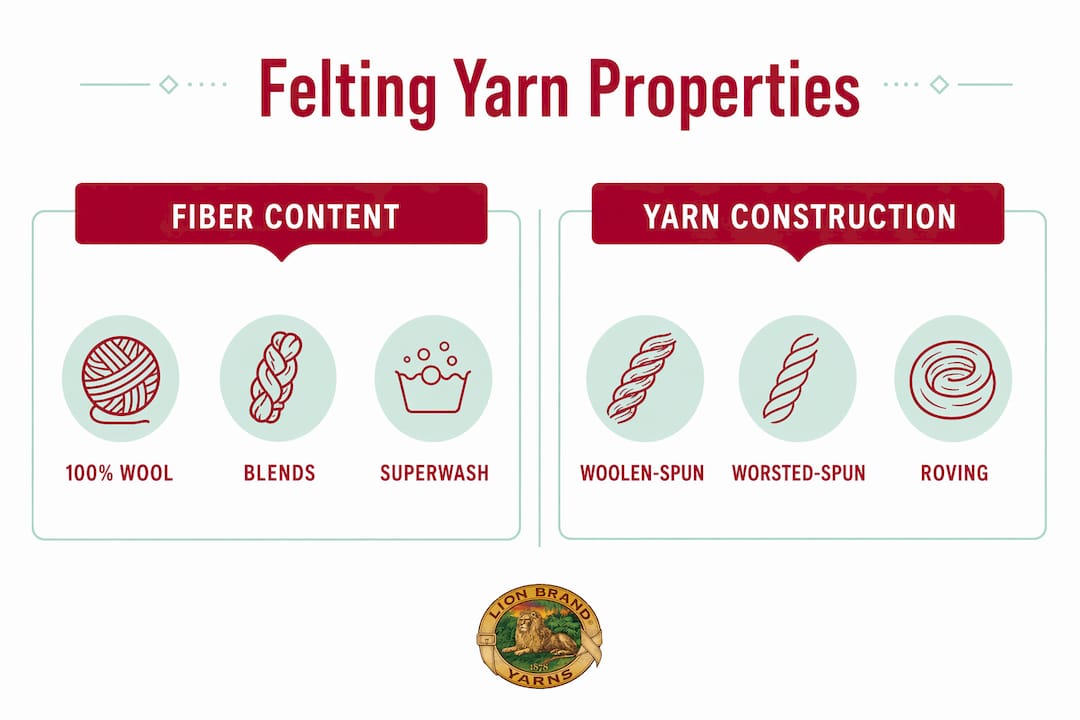
Fiber content matters enormously. A 100% natural wool yarn felts fastest because every fiber carries intact scales. Blends with as little as 10% wool can felt, but the process takes longer and produces a less dense result. Acrylic fibers do not felt at all, so a yarn with a high acrylic percentage will resist the process entirely.
Yarn construction is the factor most crafters overlook. Woolen-spun yarns have randomly oriented fibers that trap air and interlock quickly during agitation. Worsted-spun yarns, by contrast, have fibers combed parallel and smooth, which causes them to resist felting even when the wool content is high. A worsted-spun 100% merino yarn can frustrate beginners who expect it to shrink and bind like a woolen-spun yarn.
Fiber treatments also change the outcome. Anti-shrink coatings, sometimes called superwash finishes, are applied to many machine-washable wool yarns specifically to prevent the scales from interlocking. These yarns will not felt. Recycled wool without anti-shrink treatment, however, felts well in wet conditions.
Crimp and texture add another layer of nuance. Highly crimped breeds like Corriedale produce a lofty, fast-felting fiber. Finer breeds like Merino felt into a softer, smoother surface. Romney and similar medium-grade wools land in the middle, offering good structure for bags and home goods.
| Yarn Type | Fiber Orientation | Felting Speed | Best For |
|---|---|---|---|
| Woolen-spun wool | Random, lofty | Fast | Bags, hats, thick textiles |
| Worsted-spun wool | Parallel, smooth | Slow to none | Garments, not ideal for felting |
| Superwash wool | Treated, scale-free | Does not felt | Machine-washable knits |
| Recycled wool (untreated) | Variable | Moderate | Wet felting projects |
| Wool blend (min. 10% wool) | Mixed | Slow | Lightweight felted accents |
Pro Tip: Check the yarn label for “superwash” or “machine washable” before buying for a felting project. Either label means the yarn will not felt, regardless of wool content.
How do wet felting and needle felting techniques differ?
Wet felting uses hot soapy water, friction, and rolling to bind fibers into flat, smooth textiles. Needle felting uses barbed needles to mechanically tangle fibers into sculpted, three-dimensional shapes. Both methods produce permanent, non-woven fabric, but they suit very different projects and skill sets.
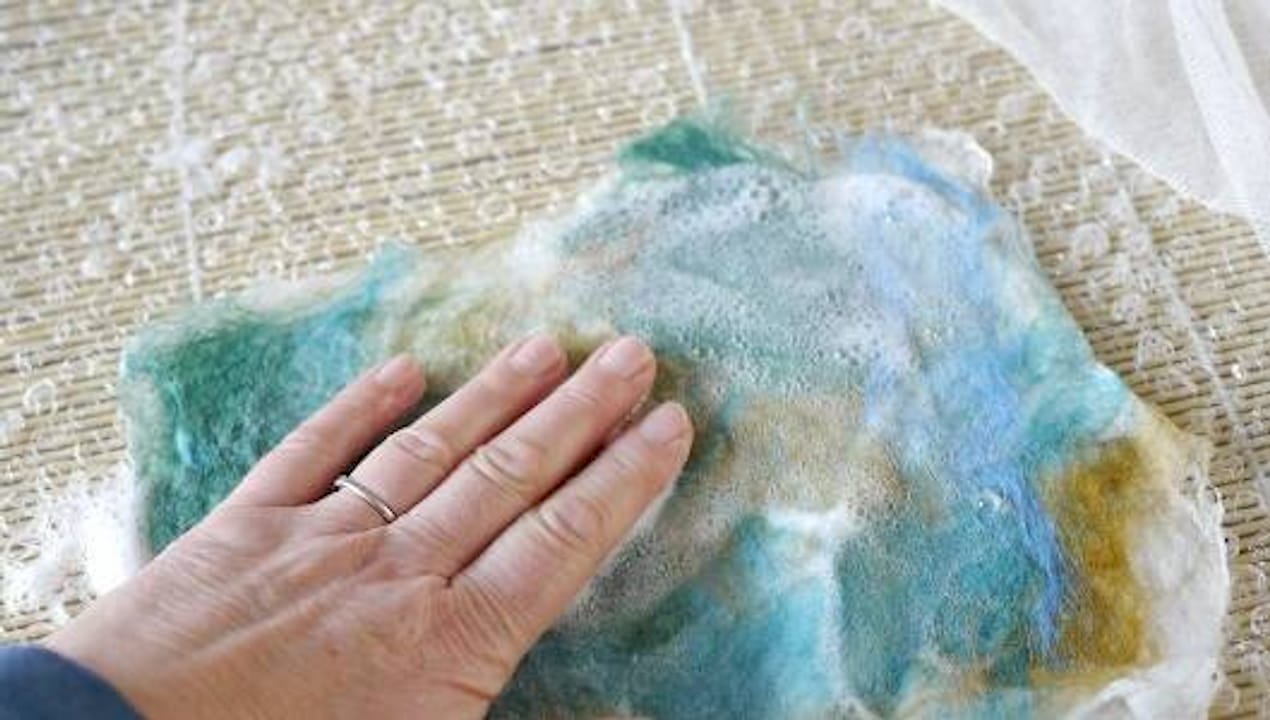
Wet felting: process and strengths
Wet felting works by saturating wool fibers with hot water and a small amount of dish soap, then applying friction through rubbing, rolling, or machine agitation. The heat opens the fiber scales, the soap reduces surface tension, and the friction drives the scales to interlock. The final stage, called fulling, involves vigorous agitation that locks fibers tightly and gives the finished fabric its strength. Wet felting is ideal for flat textiles like scarves, bags, and rugs.
Pros of wet felting:
Produces smooth, even surfaces suited to wearables
Scales well for large projects like tote bags and blankets
Requires minimal specialized tools (hot water, soap, a towel)
Works well with knitted or crocheted wool pieces for a “fulled” look
Cons of wet felting:
Messy and requires workspace protection
Less control over fine detail
Shrinkage can be unpredictable without test swatches
Needle felting: process and strengths
Needle felting uses barbed needles that catch and tangle fibers with each poke into a foam mat. No water or heat is needed. The technique excels at building three-dimensional sculptures, adding surface embellishments, and creating detailed pictorial designs. A coarser needle builds the core structure quickly. A finer needle refines the surface and adds detail.
Pros of needle felting:
Precise control over shape and texture
No water or drying time required
Excellent for 3D figures, portraits, and surface decoration
Cons of needle felting:
Needles are sharp and require careful handling
Slower for large, flat areas
Needle breakage occurs if the needle is twisted during poking
Pro Tip: Always poke straight down and pull straight up. Twisting the needle sideways is the leading cause of breakage. Start with a coarser gauge needle (36 or 38) to build mass, then switch to a finer gauge (40 or 42) for surface finishing.
Hybrid approaches
Combining wet and needle felting opens up a wider range of textures and effects. A crafter can wet-felt a flat base, then use needle felting to add sculpted details or colorful embellishments on top. This hybrid method is particularly popular for wall art, decorative panels, and wearable accessories with dimensional accents.
What types of wool yarn are best suited for felting projects?
The best yarn for felting is a 100% wool, woolen-spun yarn with no superwash treatment. Beyond that baseline, breed and weight shape the final result.
For wet felting flat textiles, bulky and worsted-weight woolen-spun yarns shrink down to a dense, sturdy fabric. Lion Brand’s Fishermen’s Wool® Yarn is a 100% wool workhorse that felts reliably for bags, hats, and home goods. Its natural, undyed version felts fastest because natural undyed wool retains rougher scales that interlock more readily. Acid-dyed wools with smoother surfaces take more time to reach the same density.
For needle felting, loose wool roving or batting is the standard material. Yarn can be unraveled and used as roving, or used whole as a structural element within a needle-felted piece. Lion Brand’s LB Collection Fifty Fifty offers a natural fiber option worth exploring for crafters who want a versatile wool suitable across felting applications.
Color and dye method affect more than aesthetics. Natural, undyed wool felts faster. Commercially dyed wool still felts well but may require additional agitation time. Avoid yarns labeled “colorfast” with finishes that coat the fiber surface, as these can slow the felting process.
Key yarn selection tips:
Choose woolen-spun construction over worsted-spun for faster, more even felting
Avoid any yarn labeled superwash, machine washable, or anti-shrink
Test a small swatch before committing to a full project
Skip fabric softener during washing prep, as it coats wool scales and blocks felting
| Yarn Type | Fiber Content | Felting Method | Project Use |
|---|---|---|---|
| Woolen-spun bulky wool | 100% wool | Wet felting | Bags, hats, rugs |
| Wool roving | 100% wool | Needle felting | Sculptures, embellishments |
| Worsted-weight untreated wool | 100% wool | Wet felting | Scarves, accessories |
| Wool blend (min. 10% wool) | Wool + other fiber | Wet felting (slow) | Light accents |
| Superwash wool | Treated wool | Neither method | Not suitable for felting |
What practical steps ensure successful felting projects?
Successful wet felting follows a clear sequence. Skipping steps, especially fulling, produces weak, uneven fabric.
Prepare your workspace. Lay a towel or bubble wrap on a flat surface. Fill two basins: one with hot soapy water, one with cold water.
Wet the fiber. Submerge your wool yarn or knitted piece in hot soapy water. Press out air bubbles gently.
Apply friction. Rub the fiber between your palms or roll it inside a bamboo mat. Work evenly across the surface.
Full the fabric. Increase agitation by throwing the piece against the work surface repeatedly. This fulling phase is what locks fibers tightly and builds durability.
Rinse and shape. Rinse in cold water to stop the felting process. Shape the piece while wet and allow it to air dry flat.
For needle felting, the sequence is simpler but requires patience.
Place wool roving or yarn on a foam mat.
Use a coarse needle to poke repeatedly, building the core shape.
Switch to a finer needle to smooth and detail the surface.
Rotate the piece regularly to prevent it from sticking to the mat.
Common mistakes to avoid:
Uneven density from working only one area at a time
Over-felting, which makes fabric brittle and hard to shape
Using fabric softener in the rinse, which undoes felting progress
Twisting the needle during needle felting, which causes breakage
Pro Tip: Always knit or crochet a test swatch and felt it before starting your full project. Wool shrinks unpredictably, and a swatch tells you exactly how much size to add to your pattern.
How does understanding wool felting science improve your results?
Wool felts because of keratin, the protein that forms each fiber. Keratin fibers are covered in overlapping scales that, under heat and agitation, catch on neighboring scales and lock together permanently. This is not a surface-level change. Felting causes biochemical changes including the breakdown of disulfide bonds within the keratin structure, which physically unites fibers at a molecular level.
Research confirms that felted wool shows significant decreases in sulfur content. This reflects the breaking of disulfide bonds during agitation. The structural change is irreversible, which is why felted fabric cannot be unfelted.
“Wool felting degrades fiber keratin, breaking disulfide bonds and altering mineral content, which structurally unites fibers during felting. Significant decreases in sulfur and calcium confirm the biochemical processes underlying felting.” Source: Nature Scientific Reports
This science has direct practical implications:
Anti-felting finishes work by chemically smoothing or coating the keratin scales, preventing them from catching
High-quality, untreated wool with intact scales felts faster and more evenly
Superwash treatments modify the disulfide bond structure, which is why those yarns resist felting entirely
Choosing yarn with intact fiber integrity, not just high wool content, determines felting efficiency
Understanding this process helps crafters make better yarn choices. A yarn’s label tells you the fiber content, but the fiber’s treatment history determines whether it will felt at all.
Key Takeaways
Felting wool yarn succeeds when crafters match yarn construction, fiber treatment, and technique to the specific demands of the project.
| Point | Details |
|---|---|
| Yarn construction drives felting | Woolen-spun yarns felt faster than worsted-spun due to random fiber orientation. |
| Superwash wool does not felt | Any yarn labeled machine washable or superwash has treated scales that block interlocking. |
| Wet felting suits flat textiles | Hot water, soap, and fulling create dense, durable fabric for bags, hats, and rugs. |
| Needle felting excels at detail | Barbed needles build 3D shapes and surface embellishments without water or heat. |
| Avoid fabric softener | Fabric softener coats wool scales and prevents fibers from bonding during wet felting. |
Lion Brand’s perspective on choosing the right felting approach
Yarn construction matters more than fiber content alone. Lion Brand has seen crafters buy a beautiful 100% merino yarn, knit a bag, toss it in the wash, and pull out something that barely changed size. The culprit is almost always a superwash finish, not the wool itself. Reading the label carefully before purchasing saves a project.
The other mistake worth calling out is expecting worsted-spun yarn to felt quickly. Even without a superwash finish, a tightly spun, combed yarn resists the scale-interlocking process. Crafters who switch to a woolen-spun yarn for the same project often see dramatically faster, more even results.
On the needle felting side, the temptation is to rush. Using only a coarse needle from start to finish leaves a lumpy, pitted surface. The two-needle approach, coarse for structure and fine for finishing, produces work that looks intentional and polished. Lion Brand recommends treating needle felting as a slow, controlled process rather than a fast one.
Blending both techniques is where the most interesting work happens. A wet-felted felted tote becomes something entirely different when needle-felted motifs are added to the surface. The base provides structure; the embellishments provide personality. That combination is worth experimenting with at every skill level.
Ready to start your first felting project?
Lion Brand’s Fishermen’s Wool® Yarn is a 100% wool yarn built for felting. It shrinks evenly, holds its shape after fulling, and comes in a range of natural and dyed colorways suited to both wet and needle felting applications.
For crafters who want a pattern to guide the process, Lion Brand’s free library includes a felted soap pattern, a felted ornament, and a Felted Plaid Blanket for those ready to tackle a larger home decor project. Each pattern is sized to account for felting shrinkage, so the guesswork is already done. Browse the full collection and find the project that matches your skill level and creative goals.
FAQ
What is wool felting?
Wool felting is the process of interlocking wool fibers into a dense, permanent fabric using moisture, heat, friction, or barbed needles. The result is a non-woven textile that holds its shape without stitching.
Can all wool yarn be felted?
No. Wool yarn labeled superwash or machine washable has been treated to prevent felting. Only untreated wool with intact fiber scales will felt reliably.
What is the difference between wet felting and needle felting?
Wet felting uses hot soapy water and agitation to create flat, smooth textiles. Needle felting uses barbed needles to mechanically tangle fibers into three-dimensional shapes without water.
How much does wool shrink when felted?
Shrinkage varies by yarn, but felted wool typically shrinks significantly in both length and width. Always knit or crochet a test swatch and felt it first to measure the exact shrinkage rate for your specific yarn.
Why is my wool yarn not felting?
The most common cause is a superwash or anti-shrink finish on the yarn. Worsted-spun construction and fabric softener residue also prevent felting. Switch to an untreated, woolen-spun 100% wool yarn for best results.