Crochet Hook Material Differences: Your Complete Guide
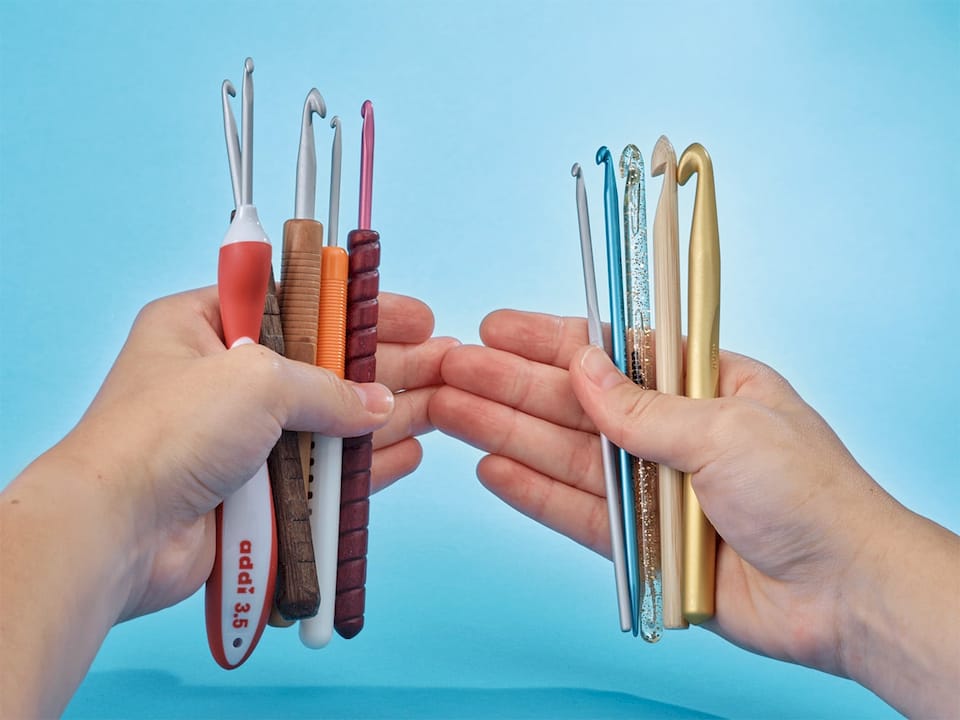
What are the main crochet hook material differences?
The material your crochet hook is made from directly shapes how your stitches form, how your yarn behaves, and how your hands feel after an hour of work. Aluminum produces tight, even stitches because its smooth surface lets yarn glide fast. Wood and bamboo add friction, which slows yarn movement and creates slightly looser, larger stitches from the same hook size. Steel handles fine thread with precision. Plastic sits somewhere in the middle, though quality varies widely.
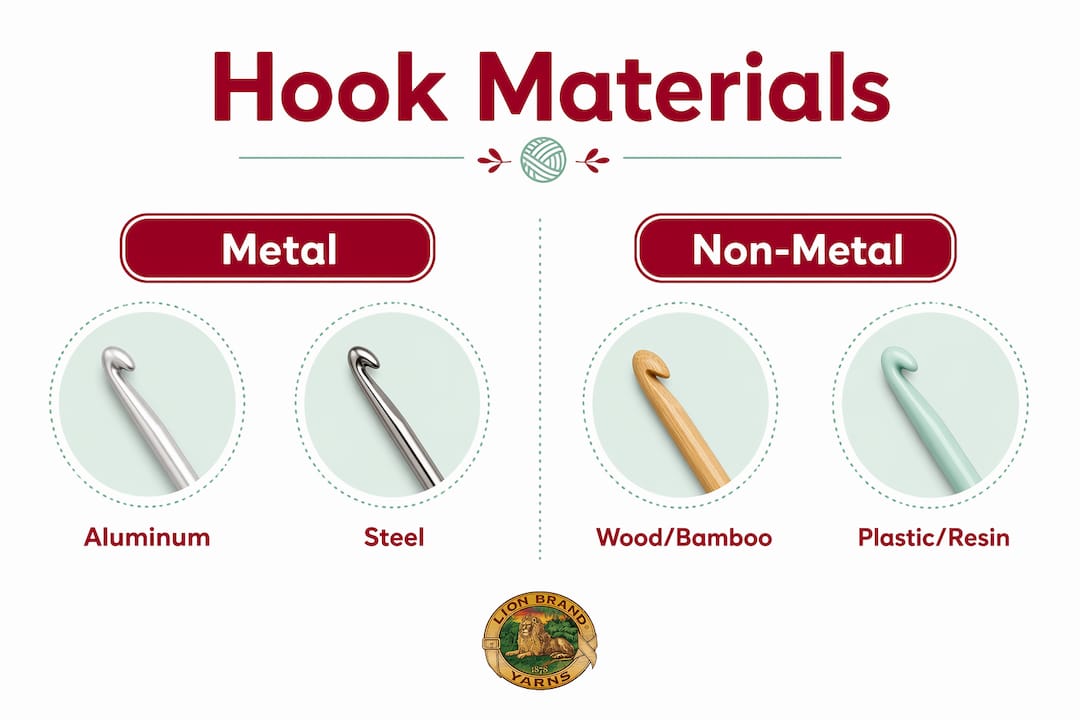
Here is a quick breakdown of the five main materials and their defining traits:
Aluminum: Smooth, lightweight, affordable, fast yarn glide, best for textured or high-tension fibers like acrylic and wool blends
Steel: Dense, small, extremely durable, built for fine thread and lace work, not suited for standard yarn weights
Wood: Warm to the touch, slightly grippy surface, comfortable for long sessions, best for slippery fibers like silk or bamboo yarn
Bamboo: Lightweight, warm, renewable, similar grip to wood but with a springier feel, good for natural fibers and beginners
Plastic/Resin: Budget-friendly, lightweight, moderate glide, quality varies from flimsy to surprisingly durable depending on the brand
No single material wins across every situation. The right hook depends on your yarn, your tension habits, and how long you plan to crochet in one sitting. Lion Brand carries a range of hooks to match each of these needs, from the HiyaHiya Aluminum Crochet Hooks for everyday worsted projects to the Boye Steel Crochet Hook for fine thread work.
How hook anatomy connects to material choice
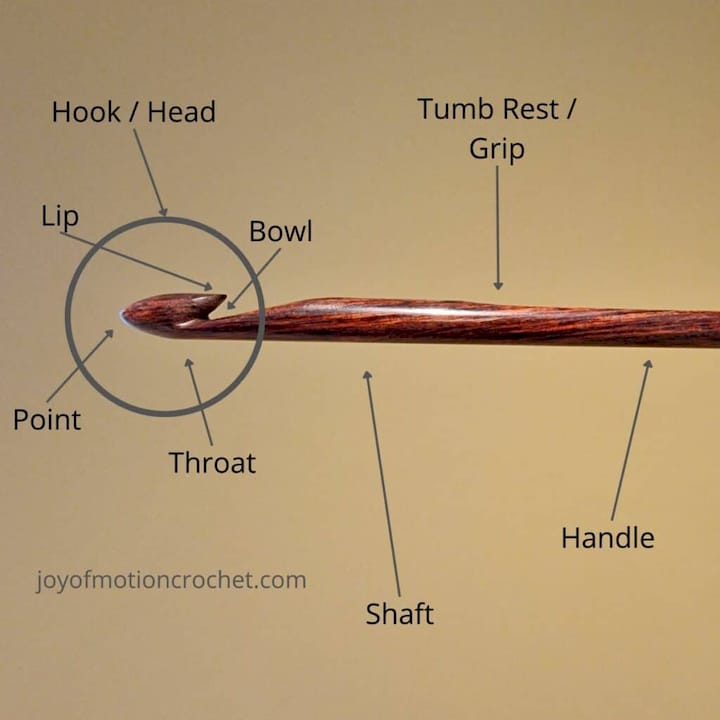
Every crochet hook shares the same four parts: the head (the curved tip that catches yarn), the throat (the tapered section below the head), the shaft (the straight working section that sets stitch size), and the handle (what your hand grips). Each part behaves differently depending on what the hook is made from.
The head and throat do the most work, and their surface texture determines how easily yarn slides on and off. An aluminum head is polished smooth, so yarn releases quickly and cleanly. A wooden head has a faint grain texture that adds just enough resistance to keep yarn from slipping off accidentally. Steel heads are the sharpest and most precise, which is why they work so well for tiny stitches in fine thread.
The shaft is where material affects stitch size most directly. Material governs yarn glide along the shaft: wood causes more drag, yielding larger stitches, while metal yields tighter stitches because yarn moves faster. This means two hooks labeled the same size can produce noticeably different gauge results if they are made from different materials.
The handle is about comfort and weight distribution. Metal handles feel cool and firm, which some crafters find tiring over long sessions. Wood and bamboo handles warm up in the hand quickly and absorb a little moisture, keeping grip steady. Plastic handles are light but can feel insubstantial, and some crafters notice them feeling slightly slick.
| Hook Part | Aluminum | Steel | Wood/Bamboo | Plastic |
|---|---|---|---|---|
| Head/Throat | Smooth, fast release | Sharp, precise | Slightly textured, controlled | Moderate, variable |
| Shaft | Consistent glide, tighter stitches | Very smooth, fine gauge | More drag, looser stitches | Between metal and wood |
| Handle | Cool, firm, can fatigue hands | Small, can strain fingers | Warm, absorbs moisture | Lightweight, variable grip |
| Overall weight | Light to medium | Very light (small size) | Light, springy | Very light |
Comparing crochet hook materials across every key factor
This is where the real decisions get made. Each material has a distinct personality, and understanding those differences helps you stop guessing and start matching your hook to your project intentionally.
Aluminum
Aluminum hooks are the most widely used for good reason. Their smooth, anodized finish lets yarn move fast, which suits high-volume projects like blankets and garments where you want to cover ground quickly. They work especially well with textured or high-friction yarns because the slick surface compensates for the yarn’s natural drag. Metal’s smooth surface allows speedy stitching with less drag, though the firmness and cool feel can increase hand strain during extended sessions.
HiyaHiya Aluminum Crochet Hooks are a strong example of what quality aluminum looks like in practice. The anodized finish stays consistent across the shaft, and the size range covers everything from fine lace weights to bulky projects.
Steel
Steel hooks are a specialty tool, not an everyday one. They come in much smaller sizes than aluminum hooks and are designed specifically for thread crochet, doilies, and fine lace. Steel’s strength and resistance mean these hooks hold their shape through years of detailed work without bending. The tradeoff is that the small size can strain fingers during long sessions, and they are not designed for standard yarn weights at all.
The Boye Steel Crochet Hook is a classic choice for thread work. At size 12, it handles fine cotton thread cleanly and holds its precision over time.
Wood
Wood hooks feel genuinely different from metal in the hand. They warm up quickly, the grain texture grips yarn without snagging it, and the slightly flexible shaft absorbs some of the repetitive motion that can tire hands. Wood’s texture and thermal properties provide natural ergonomic benefits and controlled tension, making them particularly good for slippery fibers like silk, bamboo yarn, or Coboo Yarn where you need the hook to hold the yarn rather than let it race off. The downside is that lower-quality wood can splinter or develop rough patches over time, and wood hooks generally cost more than aluminum.
Bamboo
Bamboo is technically a grass, not a wood, and it behaves a little differently. It is lighter and springier than hardwood hooks, warms up fast in the hand, and is considered a renewable resource. The grip level is similar to wood, making it a good fit for natural fibers and beginners who want a little more control than aluminum provides. Bamboo can be sensitive to moisture, so storing hooks in a dry place extends their life considerably.
Plastic and resin
Plastic hooks are the most accessible entry point, and their quality range is wider than most crafters expect. Cheap plastic bends under pressure and can snag yarn. Quality resin hooks, on the other hand, offer a surface that is actually smoother than aluminum in some cases, with a lightweight feel that reduces hand fatigue on large projects. One real drawback worth knowing: plastic-on-plastic vibration with acrylic yarns can produce a subtle, barely perceptible vibration that shows up as joint discomfort anywhere from the hands to the shoulders during long sessions. Switching to aluminum or wood resolves it.
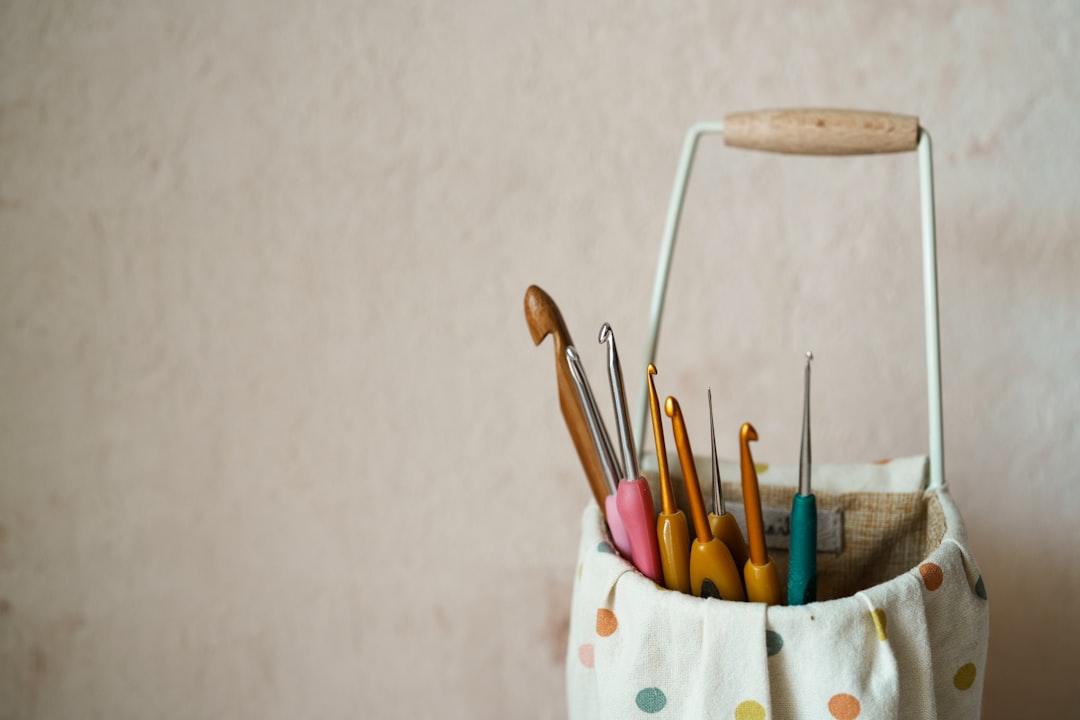
Pro Tip: If you crochet with a lot of acrylic yarn and notice hand or shoulder discomfort, try swapping your plastic hook for an aluminum or wood option before assuming it is a tension or posture problem.
| Material | Texture/Grip | Weight | Durability | Price Range | Best Yarn Types |
|---|---|---|---|---|---|
| Aluminum | Smooth, fast | Light to medium | High | Low to moderate | Acrylic, wool blends, textured fibers |
| Steel | Very smooth, precise | Very light | Very high | Low to moderate | Fine thread, lace |
| Wood | Slightly grippy, warm | Light | Moderate | Moderate to high | Silk, bamboo, slippery fibers |
| Bamboo | Slightly grippy, warm | Very light | Moderate | Low to moderate | Natural fibers, wool, cotton |
| Plastic/Resin | Variable | Very light | Low to moderate | Low | Bulky yarns, beginner practice |
How to choose the right hook material for your project
Matching hook material to yarn type is the single most practical skill in this whole conversation. Get it right and your gauge falls into place. Get it wrong and you spend an afternoon wondering why your swatch is off.
Match material to yarn fiber first. Slippery fibers like silk, rayon, or Coboo Yarn benefit from a wood or bamboo hook because the slight grip keeps stitches from sliding off accidentally. Textured or high-friction yarns like Wool-Ease Yarn or Vanna’s Choice Yarn work well with aluminum because the smooth surface compensates for the yarn’s natural drag. Fine cotton thread for doilies or detailed lacework belongs on a steel hook.
Use material to fix tension before changing hook size. Experienced crocheters use material switching as a primary method to correct loose or tight tension before reaching for a different size hook. If your stitches are too loose, try a wood or bamboo hook in the same size. If they are too tight, switch to aluminum. Swatch tests confirm that material directly influences stitch size and tension without changing hook size at all.
Factor in session length and hand comfort. For projects that take weeks, like a large blanket worked in Wool-Ease Thick & Quick Yarn or Hometown Yarn, comfort matters as much as speed. Wood and bamboo hooks warm up in the hand and reduce the cold, firm feel that metal can produce. Crafters with arthritis or hand fatigue often find wood or ergonomic hooks like the Clover Soft Touch Crochet Hooks significantly more comfortable for extended sessions.
Consider project complexity. Intricate stitch patterns and fine gauge work call for precision, which means steel or quality aluminum. Bulky blankets and beginner projects tolerate more variation, so plastic or bamboo works fine.
Here is a quick reference by project type:
Amigurumi with acrylic yarn: Aluminum for tight, consistent stitches
Lace doilies or fine thread: Steel for precision and durability
Garments in silk or bamboo blend: Wood or bamboo for controlled tension
Chunky blankets: Aluminum or quality plastic for speed and light weight
Long sessions with any yarn: Ergonomic handles or wood for hand comfort
Beginners learning tension: Bamboo or wood for a forgiving grip
Durability and price. Aluminum and steel last essentially indefinitely under normal use. Wood and bamboo hooks are durable when stored carefully but can crack if dropped on hard floors. Plastic quality varies so much by brand that price alone is not a reliable guide. A mid-range aluminum set covers most projects and lasts years, making it the most cost-effective starting point for most crafters.
Sustainability. Wood is renewable when sourced responsibly, and bamboo grows fast enough to be one of the more sustainable material options available. Plastic hooks carry the familiar sustainability concerns of any petroleum-based product. Metal hooks require energy to produce but last so long that their per-use environmental footprint tends to be low. The final choice often balances harm reduction rather than perfection, and bamboo remains the most straightforward option for crafters who prioritize environmental considerations.
Find the right hook at Lion Brand
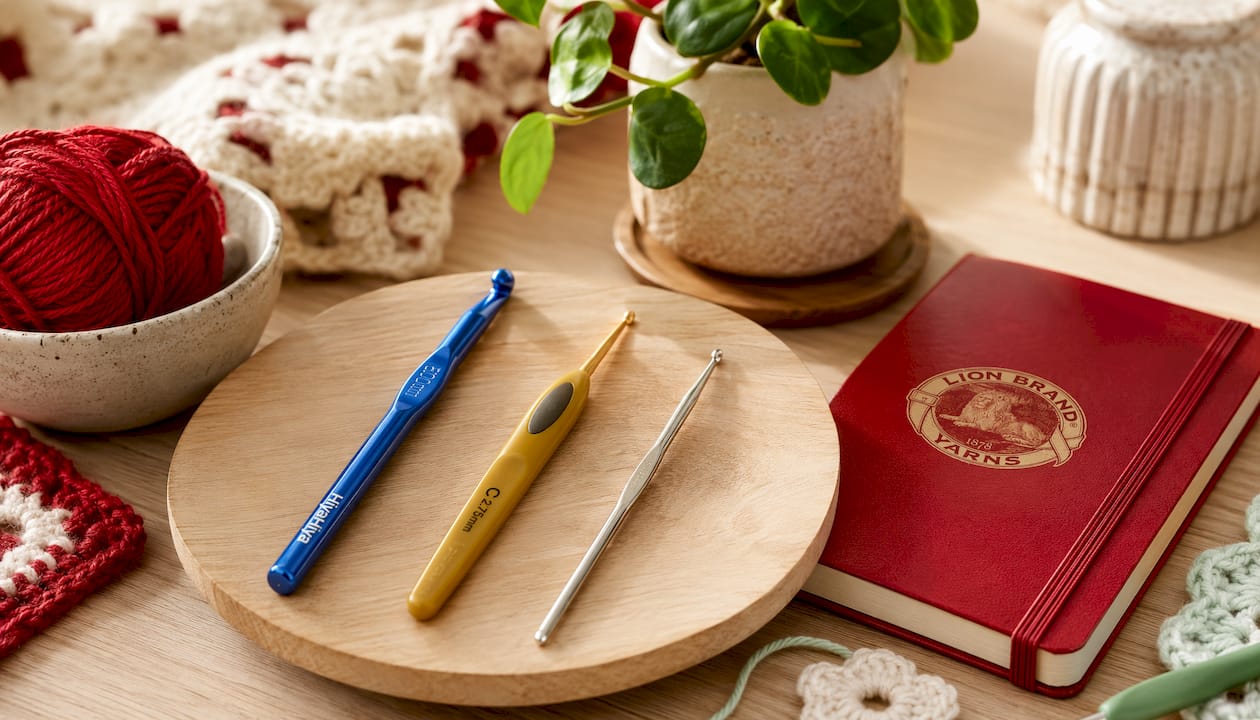
Lion Brand carries a curated selection of hooks to match every material preference and project type. The HiyaHiya Aluminum Crochet Hooks cover sizes A/B through N/P, making them a reliable all-purpose set for worsted, bulky, and everything in between. For fine thread and detailed lacework, the Boye Steel Crochet Hook delivers the precision that delicate projects demand. When comfort is the priority, the Clover Soft Touch Crochet Hooks pair ergonomic handles with quality construction for long crafting sessions. Pair any of these with Lion Brand’s free pattern library to put your new hook to work immediately.
Key Takeaways
The right crochet hook material depends on your yarn type, tension habits, and how long you crochet at a stretch, and switching materials is often the fastest way to fix a gauge problem without changing hook size.
| Point | Details |
|---|---|
| Material controls stitch tension | Wood and bamboo add drag, producing looser stitches; aluminum’s smooth surface creates tighter ones at the same size. |
| Switch materials before changing size | Trying a different hook material is the first troubleshooting step for tension problems, not reaching for a new size. |
| Steel is a specialty tool | Steel hooks are built for fine thread and lace work; they are not designed for standard yarn weights. |
| Plastic-on-plastic discomfort is real | Acrylic yarn on plastic hooks can cause subtle vibration that leads to hand and shoulder pain during long sessions. |
| Sustainability favors bamboo and wood | Bamboo is a fast-growing renewable resource; plastic carries the highest environmental cost of the common hook materials. |
FAQ
Which crochet hook material is best?
There is no single best material. Aluminum suits most yarn types and skill levels, wood and bamboo work best for slippery fibers and long sessions, and steel is the right choice for fine thread and lace. The ideal material depends on your yarn, your tension, and your comfort needs.
Is a plastic or metal crochet hook better?
Metal, especially aluminum, generally outperforms plastic for consistency and durability. Plastic hooks vary widely in quality, and acrylic yarn on plastic can cause subtle vibration that leads to hand and shoulder discomfort over time. Aluminum is smoother, more durable, and more predictable across yarn types.
What are the best quality crochet hooks?
Quality aluminum hooks like HiyaHiya and ergonomic options like Clover Soft Touch consistently earn high marks for durability, smooth finish, and comfort. For fine thread work, Boye Steel hooks are a reliable standard. The best hook is one that matches your yarn type and feels comfortable in your hand during extended use.
How do different hook materials affect stitch size?
Hook material directly influences stitch size because it controls how fast yarn moves along the shaft. Wood and bamboo create more drag, which stretches stitches slightly and produces a looser, larger gauge. Aluminum’s smooth surface lets yarn move faster, resulting in tighter stitches. Two hooks of the same labeled size but different materials can produce noticeably different gauge results.