Chenille Yarn Crochet Project Ideas for Every Skill Level
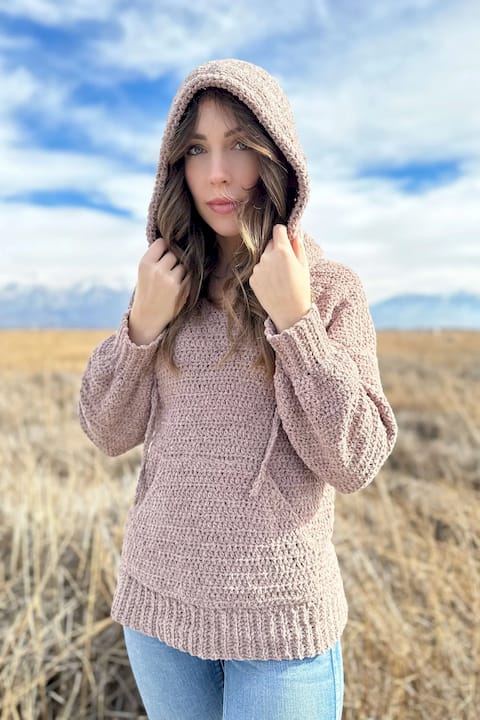
Image: Hawthorn Hoodie
Chenille yarn is defined as a pile yarn with a fuzzy, velvety surface that creates exceptionally soft, plush fabric when crocheted. The best chenille yarn crochet project ideas share one thing in common: they lean into simple stitches and cozy designs rather than fighting the yarn’s texture. Because chenille’s fuzzy pile makes fine stitch details nearly invisible, the projects that shine are blankets, throws, accessories, and plush toys where softness is the star. Lion Brand carries several bulky and super bulky options that work beautifully for these applications, from the cloud-soft A Star Is Born: Naptime to the chunky Cover Story Favorite Blanket yarn.
1. Classic chunky throw blanket
A chunky throw blanket is the most popular chenille crochet project for good reason. Single crochet and half double crochet stitches create a dense, even fabric that lets the yarn’s plushness do all the work. Because chenille favors soft-use projects like throws and pillows over precision stitch-wear, a blanket is the ideal starting point for any crafter new to this fiber.
For a standard lap blanket, a Category 6 super bulky yarn paired with a 9.0 mm hook produces a plush, substantial fabric in just a few hours. A full throw measuring roughly 50 by 60 inches typically requires three to four skeins of super bulky chenille. Lion Brand’s Cover Story is a standout choice here, delivering that signature buttery softness in a weight that works up fast.
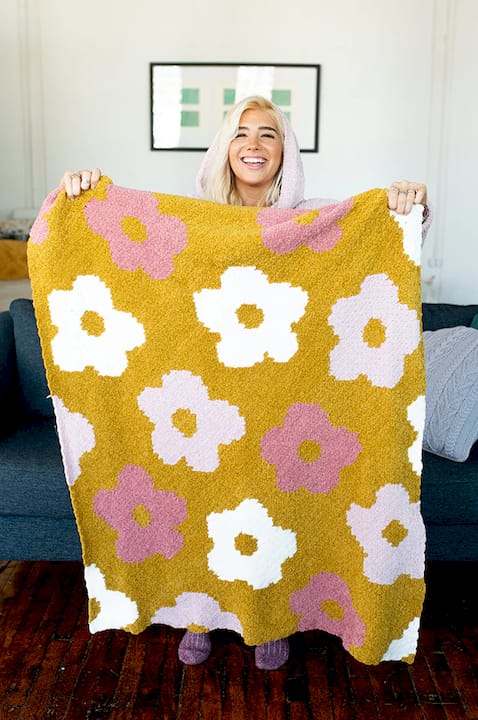 Image:Flower Power C2C Blanket
Pro Tip: Use continuous crochet throughout your blanket to cut down on the number of ends you need to weave in. Chenille tails are notoriously tricky to hide, so fewer of them means a cleaner finish.
Customizing size is straightforward. Add or subtract chains in multiples of your stitch repeat to widen or narrow the blanket. Layering two lighter chenille throws also creates a more textured, dimensional look on a bed or sofa.
2. Shell stitch lap blanket
The shell stitch is one of the few decorative stitches that translates well to chenille. Its broad, fanned clusters create enough visual movement to read through the fuzz, unlike tight cable or lace patterns that disappear entirely. This makes it a strong choice for crafters who want a little more visual interest than a plain single crochet grid.
Work shell stitches with a 7.0–9.0 mm hook in a bulky chenille yarn. The larger hook creates open, airy shells that drape beautifully. The Coastal Breeze Throw from Lion Brand combines chenille and a decorative stitch pattern with eye-catching stripes.
| Stitch | Visibility in Chenille | Best For |
|---|---|---|
| Single crochet | High | Blankets, amigurumi |
| Half double crochet | High | Scarves, cowls |
| Shell stitch | Medium | Lap blankets, wraps |
| Bobble stitch | Medium | Accent rows, pillows |
| Lace or cables | Very low | Not recommended |
3. Striped baby blanket
Chenille is one of the softest fibers you can put against a baby’s skin, which makes a striped baby blanket a natural project. Simple single crochet rows in alternating colors create clean, readable stripes even through chenille’s texture. The key is choosing a lighter bulky weight rather than super bulky so the finished blanket stays pliable and easy to fold.
The Twinkle Blanket pattern from Lion Brand gives you a solid structure to follow. When using a soft chenille yarn keep your tension relaxed throughout. Beginners benefit from chenille’s cloud-like fuzz filling in small gaps, which means minor tension inconsistencies disappear into the fabric rather than showing up as visible holes.
Pro Tip: Place a stitch marker in the first and last stitch of every row. Chenille’s fuzz makes it easy to accidentally skip an edge stitch, and markers at row ends prevent that mistake without requiring you to count constantly.
4. Cozy chenille scarf
A scarf is the fastest way to practice working with chenille before committing to a larger project. Double crochet rows in a super bulky chenille yarn produce a thick, squishy scarf in under two hours. The stitch is open enough to create good drape while still being simple enough to execute without losing count.
Hook sizes for chenille scarves typically fall in the 6.5–8.0 mm range for bulky weights. Going slightly larger than the label recommends creates a softer drape and prevents the fabric from feeling stiff. Adding a simple fringe along both short ends takes about ten minutes and gives the scarf a finished, intentional look.
Lion Brand’s Scarfie Yarn is not a chenille, but its self-striping construction shows how color variation can elevate a simple scarf. Apply that same thinking to chenille by alternating two coordinating colors every few rows for a bold, modern result.
5. Infinity cowl
An infinity cowl worked in the round is one of the best easy crochet ideas with chenille because it requires no seaming and produces a clean, polished result. Half double crochet in the round creates a stretchy, even fabric that sits beautifully around the neck. A cowl measuring roughly 10 inches tall and 24 inches in circumference works up in a single sitting with super bulky chenille.
Super bulky chenille is considered a fast-project fiber that builds up quickly and feels luxuriously soft. That speed makes cowls ideal gifts. Work in a solid color to let the texture speak, or alternate two neutrals for a subtle two-tone effect.
6. Chenille pillow cover
A pillow cover, like the Go Away Pillow kit, is one of the most practical soft yarn crochet projects because it transforms any throw pillow into a cozy, textural accent piece. Single crochet worked flat in two matching panels, then seamed on three sides and closed with buttons or a zipper, creates a removable cover that is easy to wash. Use a bulky chenille with a 6.5–7.0 mm hook for a fabric dense enough to hold its shape.
Bobble stitch accent rows add visual interest without requiring complex counting – like in the Car Seat Pillow pattern. Place one bobble row every five to six rows of single crochet for a subtle, textured stripe effect. This approach uses texture-forward design to compensate for chenille’s low stitch definition, producing a pillow that looks intentional and well-crafted.
7. Chenille wrap or cocoon cardigan
A wrap or cocoon cardigan is the most wearable garment you can make with chenille. Simple construction, typically two rectangles seamed at the shoulders with open sides, means there are no complex shaping rows to track. The fabric’s natural drape does the styling work. Use a medium bulky chenille with a 6.5 mm hook for a garment that flows rather than stiffens.
My Favorite Simple Cozy Shrug pattern from Lion Brand provides exact stitch counts and sizing guidance for this type of project. Single crochet rows create a fabric with enough openness to drape well without feeling too heavy. Avoid adding pockets or structured elements, since chenille’s pile can cause seams to pucker under repeated stress.
Key takeaways
Chenille yarn crochet projects succeed when simple stitches, relaxed tension, and cozy project types work together to showcase the fiber’s natural plushness.
| Point | Details |
|---|---|
| Stitch choice matters most | Single, half double, and double crochet show best in chenille; lace and cables disappear. |
| Hook size up from the label | Use 6.5–9.0 mm hooks for bulky and super bulky chenille to prevent stiff, tight fabric. |
| Best project types | Blankets, throws, accessories, and amigurumi suit chenille better than precision garments. |
| Manage tension carefully | Relaxed hands prevent core damage and worming that ruins chenille’s plush surface. |
| Use stitch markers consistently | Mark every 10 stitches and both row ends to track count through the fuzzy pile. |
What Lion Brand has learned about chenille
Chenille is the yarn that rewards patience and punishes rushing. The most common mistake crafters make is treating it like a standard acrylic. They pull tight, work fast, and then wonder why the fabric looks matted or why the yarn’s core is poking through. The fix is simple but counterintuitive: slow down and loosen up.
The projects that get the best results from chenille are the ones that do not ask too much of it. A blanket worked in single crochet rows is not boring. It is the right tool for the job. The yarn itself provides all the texture and visual interest the project needs. Trying to add cables or lace on top of that is like painting over a beautiful wood grain.
Lion Brand also recommends thinking carefully about end use before starting a chenille project. Chenille tends to shed over time with heavy handling, so a decorative throw or a plush toy will hold up far better than a bag or a heavily used garment. That is not a limitation. It is a design constraint that points you toward the most satisfying projects this fiber can produce.
— Lion Brand Yarn Development Team
Start your next chenille project with Lion Brand
Lion Brand carries everything you need to bring these soft yarn crochet projects to life, from premium bulky yarns to curated crochet kits that include yarn and a digital pattern. The Crochet Kit: William Blanket (bulky) is a standout option for crafters who want a complete, ready-to-start chenille project without hunting down individual supplies. For those who prefer to build their own project, browse the full crochet kits collection to find patterns and bundles sorted by skill level and project type.
Lion Brand’s free pattern library also includes hundreds of blanket, accessory, and amigurumi patterns you can adapt to chenille yarn. Whether you are starting your first throw or adding a plush toy to your project queue, Lion Brand has the yarn and the pattern to match.
FAQ
What stitches work best with chenille yarn?
Single crochet, half double crochet, and double crochet work best with chenille yarn. Complex stitches like lace or cables lose definition in the fuzzy pile and are not recommended.
What hook size should i use for chenille yarn?
Hook sizes for chenille range from 4.0–5.5 mm for light weights up to 9.0 mm or larger for super bulky. Sizing up slightly from the label recommendation prevents overly tight, stiff fabric.
Can beginners crochet with chenille yarn?
Beginners can absolutely work with chenille yarn. Its fuzzy texture fills in small gaps and hides minor tension inconsistencies, making simple repeat stitches look polished even on a first project.
Why does my chenille yarn look damaged or show the core?
Core exposure, sometimes called worming, results from pulling the yarn too tightly while crocheting. Keeping hands relaxed and letting the hook glide through stitches preserves the yarn’s plush surface.
What projects should i avoid making with chenille yarn?
Avoid projects that require heavy daily handling, such as market bags or structured garments with complex shaping. Chenille performs best in soft-use items like throws, pillows, and plush toys where shedding and pile compression are not concerns.


